
Group lessons in Taghazout run 250–400 MAD (€25–40), private coaching 600–900 MAD (€55–85), and week-long camps from around 2,650 MAD (€250). Here's the full breakdown by season and location, plus how to spot a school cutting corners.
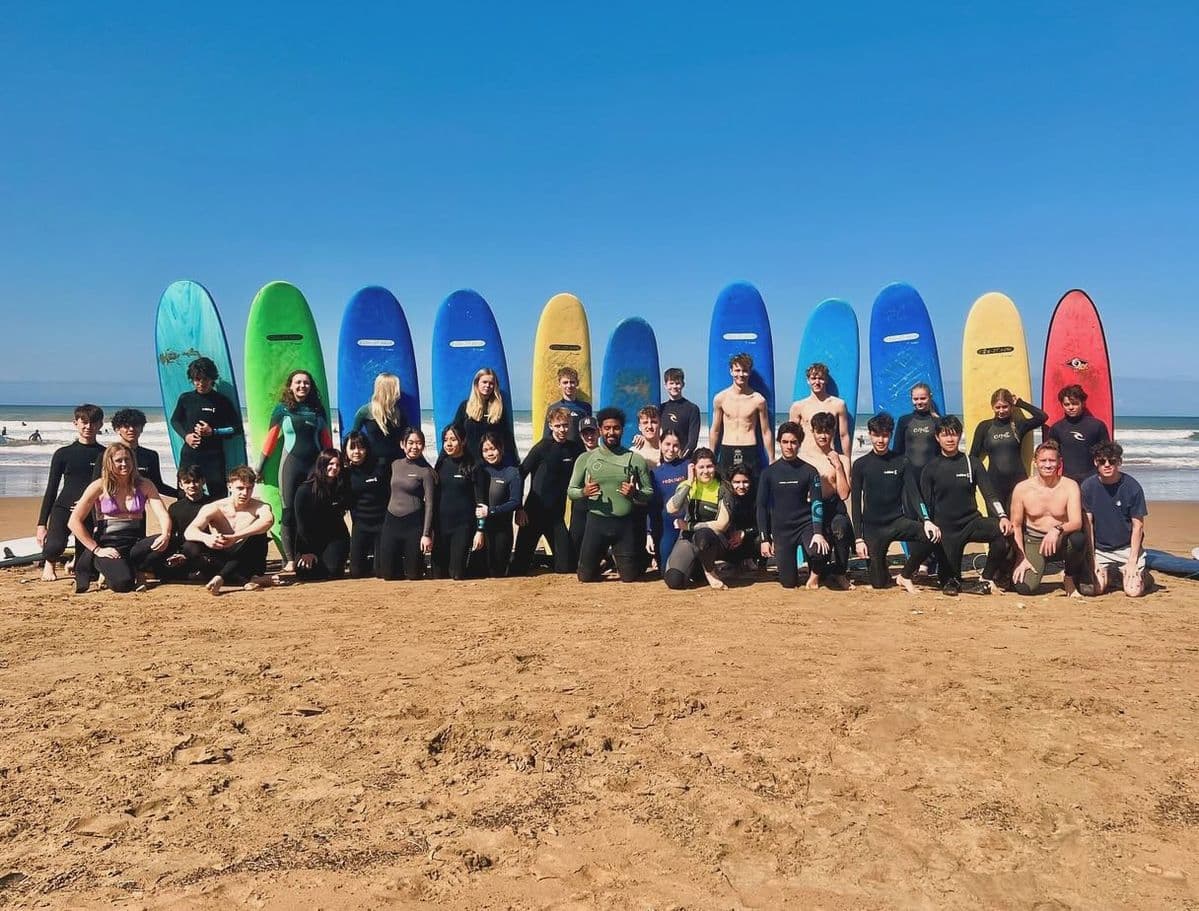
# How Much Do Surf Lessons Cost in Taghazout?
A two-hour group surf lesson in Taghazout runs 250–400 MAD (€25–40) per person, including board, wetsuit and a certified instructor. Private one-on-one coaching costs 600–900 MAD (€55–85) per session. A week-long surf camp with accommodation and two daily sessions starts at roughly 2,650–4,800 MAD (€250–450) per person [OWNER: confirm price]. Renting a board and wetsuit with no instruction runs 100–150 MAD (€9–14) a day, and the final number moves with group size, season and whether hotel transport is bundled in.
If this is your first time in the water at all, pair this page with our beginner's guide to surfing in Taghazout, which covers technique and what to pack. This page is only about the money: what things cost, what's included, and how to avoid overpaying an underqualified school.
| Option | Duration | Group size | Price | Typically includes |
|---|---|---|---|---|
| Group lesson | 2 hours | Up to 4 per instructor | 250–400 MAD (€25–40) | Board, wetsuit, instructor, insurance |
| Private lesson | 2 hours | 1-on-1 | 600–900 MAD (€55–85) | Board, wetsuit, dedicated instructor, insurance |
| Semi-private (2-on-1) | 2 hours | 2 people | Priced between group and private rates | Board, wetsuit, shared instructor, insurance |
| Surf camp (7 nights) | 1 week | Small groups | 2,650–4,800 MAD (€250–450) per person [OWNER: confirm price] | Accommodation, 2 sessions/day, breakfast + dinner, video coaching |
| Board + wetsuit rental only | Per day | N/A | 100–150 MAD (€9–14) | Gear only, no instruction, no transfer |
Editorial note: these figures are pulled from content already live on our own site. The camp row is converted from a euro-only figure. Confirm all four rows against current instructor and accommodation partner rates before publishing, since /en/surf-lessons doesn't yet list individual bookable lesson products. [OWNER: confirm price]
Most Taghazout lesson prices bundle four things: a soft-top board sized for a beginner (a hard rail to the head in whitewater is the easiest way to end a first session early), a wetsuit that actually fits, a certified instructor, and basic accident insurance for the beach session. That's the baseline behind the 250–400 MAD (€25–40) group rate, and it's what we build into ours.
Pickup from an Agadir hotel isn't always bundled in. Taghazout sits about 20–25 minutes up the coast, and not every school folds the transfer into its headline price. GoPro photos or video of your session are another add-on: some camps include this, day lessons rarely do. Tips for the instructor aren't expected but are appreciated after a good session.
If you're booking from an Agadir resort rather than staying in Taghazout itself, ask specifically whether a quote is "lesson only" or "lesson plus transfer" before comparing two prices. Add a return taxi to a lesson-only quote and the true cost can land right on top of a package that included the ride from the start.
Lesson prices themselves barely move with the season, since instructor time and gear rental are fixed costs either way. What shifts is demand, and for multi-day camps, accommodation.
October to April is Taghazout's bigger swell window, with water sitting around 17–18°C and most guests renting a full wetsuit rather than a shorty. May to September brings smaller, more forgiving swell, roughly 0.5–1.5 m, and warmer water in the 19–23°C range, which is why we put most total beginners in the water during these months. July and August are the warmest weeks of the year and also the busiest, so book a lesson slot a few days out rather than expecting to walk up and get one that morning.
The Moroccan National Tourist Office describes this stretch of coast as holding surfable swell year-round, which matches what any local will tell you: "season" here changes comfort and crowd size, not whether lessons run at all.
Camps are where the seasonal difference shows up on the invoice. Accommodation follows the same high-season pricing as everywhere else on this coast, so a camp week booked in August will usually cost more than the identical week booked in November, even though the lessons inside it are priced the same [OWNER: confirm price — request current low- and high-season camp rate cards from accommodation partners].
Location shifts price less than you'd think, but it shifts the experience for that price quite a bit.
Taghazout is where most of the established surf schools operate, close to well-known breaks like Anchor Point and Hash Point, with surf shops and instructors clustered along the main road near Panoramas. Being the hub means more competition between schools, and in our experience prices land at the lower-to-middle end of the 250–400 MAD (€25–40) group range.
Tamraght, three kilometers south and a five-to-ten-minute taxi ride away, is quieter and built around Banana Beach, which suits a first lesson better thanks to its sandy bottom and gentle whitewater. Our comparison of the two villages found that Tamraght tends to run cheaper across accommodation generally, and that pattern holds loosely for lessons too, though the gap has narrowed as more schools have opened there. Compare specific packages rather than assuming a blanket discount either way.
Agadir's city beach is the calmest of the three, sheltered inside the bay, which is why hotel activity desks along the boulevard often sell surf lessons as part of a resort package. That's convenient if you're already staying there, but activity-desk pricing usually carries a markup over booking directly with a village-based school, and you'll still spend 20–25 minutes each way getting up to Taghazout's better beginner breaks if you want the fuller experience partway through your trip.
Anything advertised well under the 250 MAD (€25) floor for a real two-hour beginner lesson is worth a second look before you book. Not necessarily a scam, but the savings usually come from somewhere: no certification, no insurance, or six students round one instructor instead of four.
Start with certification. The International Surfing Association runs the internationally recognized Level 1 instructor and Level 2 coaching courses that legitimate schools worldwide train through, including in Morocco. It's entirely reasonable to ask a school which instructors hold an ISA card, or an equivalent national qualification, before handing over a deposit.
Then check the details that don't show up in a price list:
None of this means the priciest option is automatically the safest. A well-run group lesson at the lower end of our price range can be better value than an overpriced private session with an uncertified guide. Price is a starting filter, not the whole answer.
Most first-timers catch a wave, or at least get pushed into one and ride the whitewater, within their first lesson. Standing up on your own and steering even a little usually takes three to five two-hour sessions, ideally spread over three or four days with a rest day in between. Feeling comfortable enough to paddle out and pick your own wave, rather than waiting for an instructor's push, generally takes about a week of daily practice.
That timeline is honest, not a sales pitch. Nobody stands up permanently on day one, and anyone promising it is overselling. It's also why a single drop-in lesson and a multi-day camp solve different problems. Book one lesson if trying surfing once is enough on a trip that's mostly about other things. Book three to five sessions, or a full camp week, if standing up and riding an actual wave, not just whitewater, is the real goal.
One honest exception: if you already know how to pop up, turn and paddle for yourself, a beginner group lesson is money wasted. Rent a board and wetsuit directly for 100–150 MAD (€9–14) a day and ask your riad or a village surf shop for a lift out to Hash Point or Boilers instead. Save a coached session for when you want specific feedback on a turn or a takeoff, not a repeat of the basics.
Every morning our pickup runs the same stretch of coastal road through the village, boards already loaded on the roof rack before the last guest climbs in. The question we hear most on that short drive down to the beach isn't about the swell. It's whether the price already includes the wetsuit, because a handful of listings elsewhere quote the instructor fee alone and add gear as a surprise cost once you're standing on the sand.
If you're spacing lessons over several days or doing a camp week, plan at least one morning off. Sore shoulders are normal by day three, and a rest day speeds up progression more than pushing through a fourth session on tired arms. Most guests use the gap for a half-day trip to Paradise Valley, about 40 minutes inland, or a walk through the argan forest behind the village. Neither costs much next to a lesson package, and both beat sitting in a beach chair watching everyone else surf.
We run this route most weeks, year-round, and lessons can usually be booked a day or two out, sometimes same-day outside July and August. Check current availability on our surf lessons page, and if you're building a full week around the coast rather than just a beach morning, our Taghazout and Agadir tour pages cover everything else worth doing between sessions.
A group lesson runs 250–400 MAD (€25–40) per person, including board, wetsuit and an instructor. Private one-on-one coaching costs 600–900 MAD (€55–85) for the same two hours.
For a first-timer, a group lesson is usually enough, since the whole first session is spent in the whitewater regardless of group size. Private coaching earns its price once you're past the basics and want faster technical feedback, or if you have limited days and want to progress quickly.
Published per-person rates for a 7-night camp with two daily sessions, breakfast and dinner run roughly 2,650–4,800 MAD (€250–450), with the top of that range mostly reflecting high-season accommodation rather than the lessons themselves [OWNER: confirm price].
Not always. Taghazout sits about 20–25 minutes up the coast from Agadir, and some schools quote the lesson only, adding transport separately. Always ask whether a price is "lesson only" or "lesson plus transfer" before comparing two quotes.
Tamraght has traditionally run a little cheaper across accommodation and lessons alike, though the gap has narrowed as more schools have opened there. Taghazout offers more choice and proximity to advanced breaks like Anchor Point; Tamraght suits beginners who want a quieter base near Banana Beach.
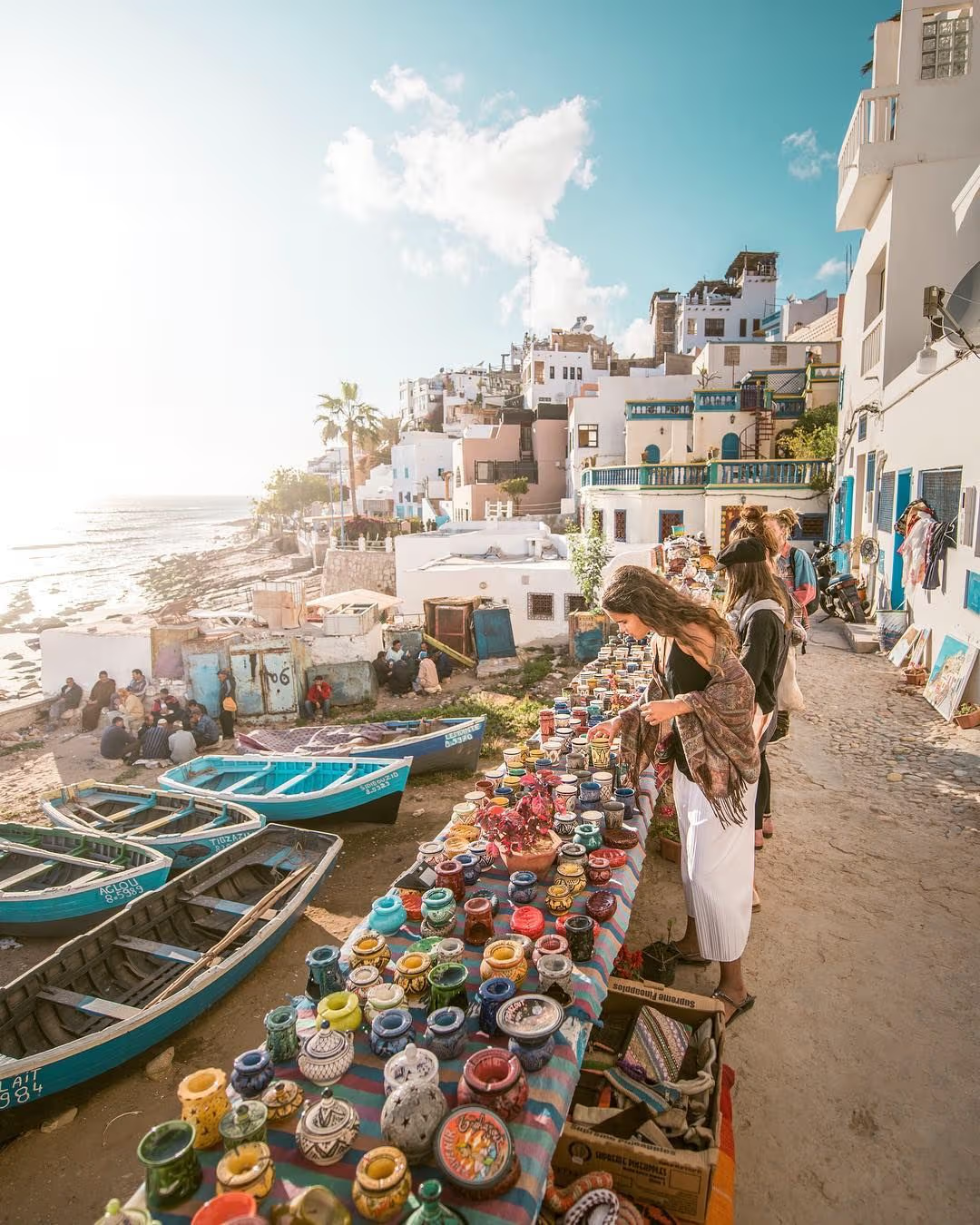
From surf breaks and sandboarding to Paradise Valley waterfalls and smoky lamb tagine, this guide covers everything you need to make the most of Morocco's sunniest coast.

Forget restaurant guides. Here's how we actually eat in Agadir and Taghazout: fish by weight at the port, souk stalls for breakfast, and what a tagine should really cost.
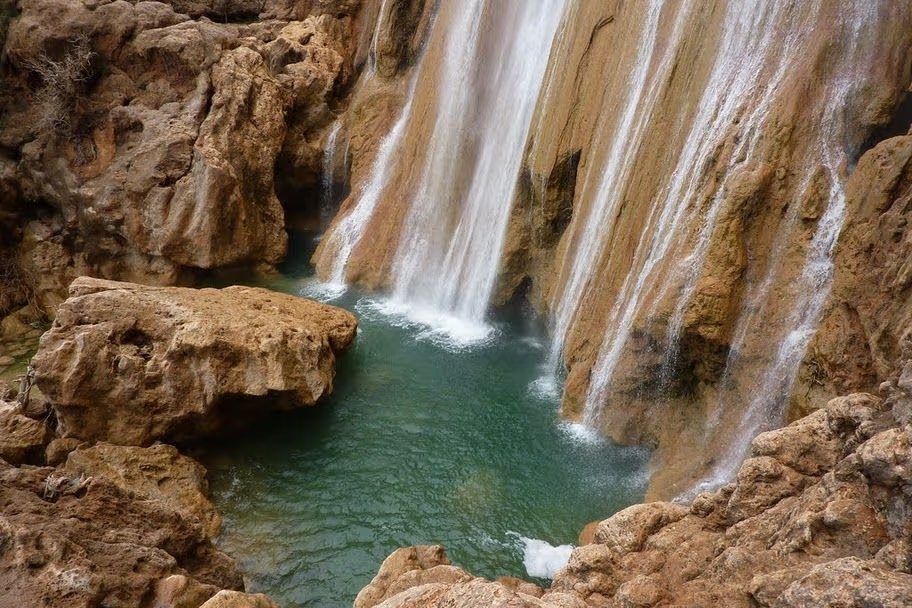
The Imouzzer waterfalls are at their best from November to April and a trickle the rest of the year — here's what we tell guests before they book, plus the honest case for going anyway.

Discussion
Share your experience, ask a question, or correct us — we read every comment.
Be the first to share your thoughts on this article.