Taghazout
دليل ركوب الأمواج في تغازوت للمبتدئين: كل ما تحتاج معرفته
لم تقف على لوح أمواج من قبل؟ شمس تغازوت الدافئة وأمواجها الشاطئية اللطيفة ومدربوها من الطراز العالمي تجعلها من أفضل أماكن العالم لتعلّم ركوب الأمواج.

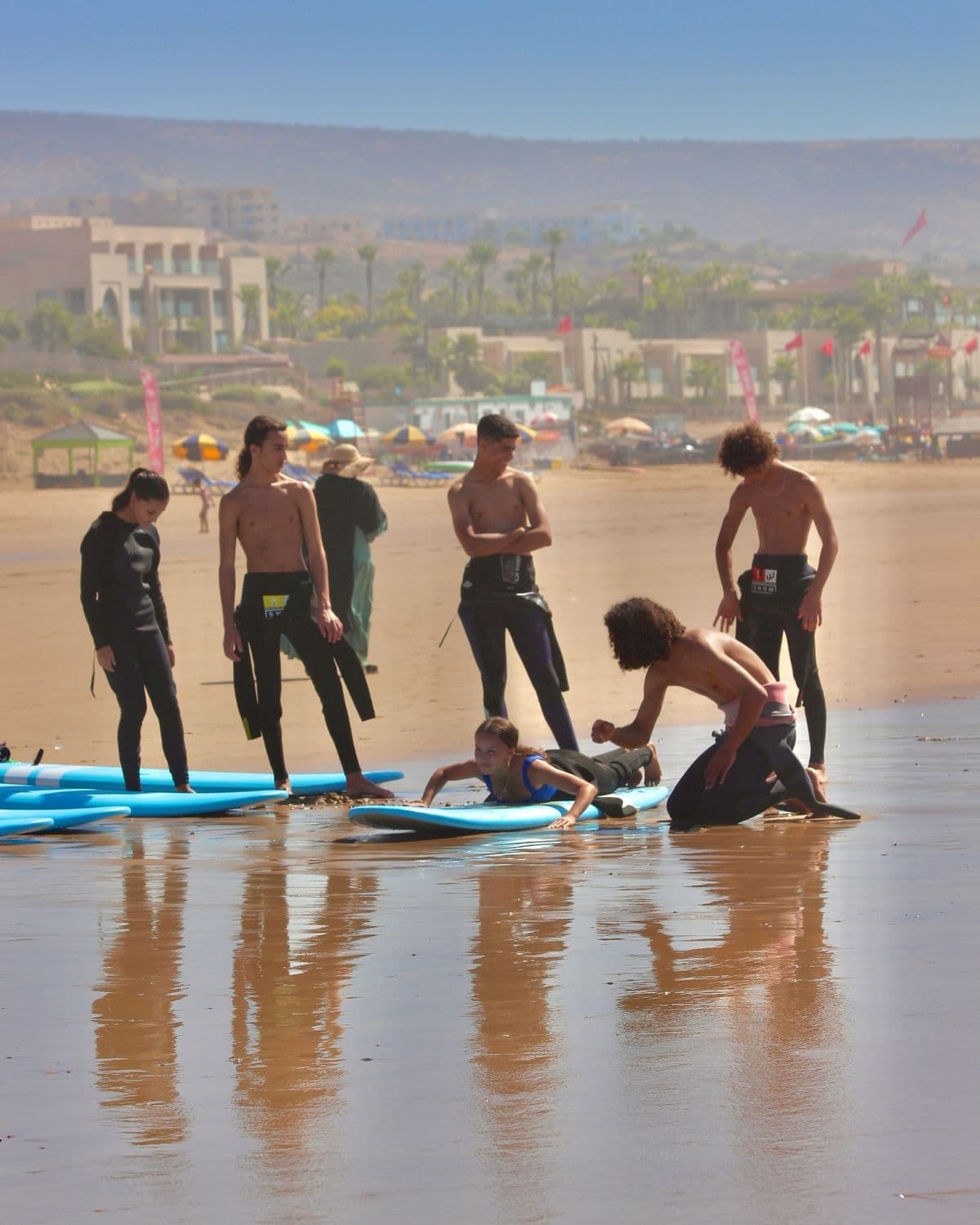
تغازوت حاضرة على خريطة عالم ركوب الأمواج منذ عقود، لكنها لم تصبح وجهةً في متناول المبتدئين تمامًا إلا في السنوات الأخيرة. ما زالت القرية محتفظة بروحها — قوارب الصيد، الجدران الملوّنة، ورائحة الشاي بالنعناع المتسلّلة من نوافذ المقاهي — لكنها اليوم تضم أيضًا مدارس ممتازة لركوب الأمواج، ومعدات بحالة جيدة، ومدربين يعرفون تمامًا كيف يجعلون المبتدئ يمتطي موجته الأولى في حصة واحدة.
إن كنت تحلم منذ زمن بتجربة ركوب الأمواج وتتساءل ما إذا كانت تغازوت هي المكان المناسب للبداية، فالجواب المختصر: نعم. وإليك كل ما تحتاج معرفته قبل الانطلاق.
هل تناسب تغازوت المبتدئين في ركوب الأمواج؟
تغازوت وجهة ممتازة للمبتدئين في ركوب الأمواج، خصوصًا بين أبريل وسبتمبر حين تصل من المحيط الأطلسي أمواج أصغر حجمًا وأكثر انتظامًا. توفر الشواطئ الرملية جنوب القرية — وعلى رأسها Banana Beach وتمراغت — الأمواج البيضاء اللطيفة التي يحتاجها المبتدئ، فيما يجعل الطقس الدافئ والشمس شبه الدائمة التعلم متعة حقيقية لا اختبارًا للتحمّل.
فهم أنواع الأمواج
بُنيت شهرة تغازوت على أمواجها الصخرية الممتدة (point breaks) — أمواج تنكسر بانتظام على طول رأس صخري، مانحةً المتمرسين انزلاقًا طويلًا ومثاليًا. هذه الأمواج ليست للمبتدئين. لكن على بُعد مسافة قصيرة بالسيارة، تتغير الصورة كليًا.
أمواج مناسبة للمبتدئين
- Banana Beach — الوجهة الأولى للدروس الأولى. قاع رملي، وأمواج بيضاء هادئة، ومساحة كافية للجميع دون ازدحام.
- شاطئ تمراغت — على بُعد 3 كم جنوب تغازوت، شاطئ أطول بظروف منتظمة تناسب المبتدئين، وتتخذه عدة مدارس موثوقة مقرًا لها.
- شواطئ أكادير — يتميز الطرف الجنوبي من شاطئ أكادير بأمواج بيضاء ناعمة ومتدحرجة حين يكون البحر هادئًا. خيار رائع لحصتك الأولى على الإطلاق.
أمواج للمشاهدة (لا لركوبها بعد)
- Anchor Point — أشهر موجة في تغازوت. موجة يمينية طويلة وقوية تتطلب مستوى متوسطًا إلى متقدم. تستحق المشاهدة حتى لو لم تكن قادرًا على ركوبها بعد — فالمنظر من أعلى الجرف من أجمل ما ستراه في المغرب.
- Hash Point — أصغر وأسهل من Anchor Point، لكنها تظل أنسب لمن يجيد قراءة الأمواج والتجديف بكفاءة.
- Panoramas — موجة يمينية ممتعة لأصحاب المستوى المتوسط، يمكن رؤيتها من الطريق الرئيسية فوق القرية.
ماذا تتوقع من حصة ركوب الأمواج؟
تستغرق الحصة القياسية للمبتدئين ساعتين، وتنقسم عادةً كما يلي:
- التدريب على الرمال (30 دقيقة): ستتعلم كيف تقرأ المحيط، وأين تتمركز، وكيف تجدّف بكفاءة، وتتمرّن على حركة الوقوف السريع على اللوح (pop-up) فوق الرمال.
- التدريب في الماء (90 دقيقة): ينزل المدرب معك إلى الماء، ويدفع اللوح نحو الموجة في اللحظة المناسبة، ويقدّم لك ملاحظات فورية. معظم المبتدئين يركبون موجتهم الأولى خلال أول 30 دقيقة في الماء.
- جلسة التقييم: المدرب الجيد يعرض عليك مقاطع فيديو لانزلاقاتك إن كان يصوّر — وهي لا تُقدَّر بثمن لفهم ما يجب تصحيحه.
ألواح المبتدئين كبيرة ومصنوعة من الفوم (foamies — ألواح طويلة بسطح إسفنجي) — عريضة وثابتة وعالية الطفو. لن تركب لوحًا قصيرًا في رحلتك الأولى، وهذا هو الصواب تمامًا.
أفضل وقت لزيارة تغازوت لركوب الأمواج
موسم ركوب الأمواج في تغازوت مستمر عمليًا على مدار السنة، لكن الظروف تتفاوت بشكل كبير:
من أكتوبر إلى أبريل هو ذروة موسم الأمواج. تصل أمواج الأطلسي بانتظام، وقد يبلغ ارتفاعها 3–5 أمتار عند الرؤوس الصخرية. في هذه الفترة يتوافد المتمرسون من مختلف أنحاء أوروبا. قد تكون الظروف صعبة على المبتدئين أثناء الأمواج الكبيرة — راجع النشرة واستشر مدربك قبل كل حصة.
من مايو إلى سبتمبر هو الوقت المثالي للمبتدئين. الأمواج أصغر (0.5–1.5 m)، والطقس دافئ وجاف (25–32 °C)، وأجواء التعلم عمومًا أكثر استرخاءً. ويقدّم يونيو وسبتمبر أفضل مزيج من المياه الدافئة والأمواج الجيدة والازدحام الأقل.
يوليو وأغسطس هما ذروة الموسم السياحي. تكون الأمواج في أصغر حالاتها، لكن الشاطئ يزدحم وترتفع أسعار الإقامة. يبقيان وقتًا جيدًا للتعلم — فقط احجز مسبقًا.
أحوال الأمواج في تغازوت شهرًا بشهر
| الشهر | ارتفاع الأمواج المعتاد | حرارة الماء | ماذا ترتدي | الازدحام | التقييم للمبتدئين |
|---|---|---|---|---|---|
| يناير | 2–4 m | 17 °C | بدلة 3/2 | متوسط | ★★ |
| فبراير | 2–4 m | 17 °C | بدلة 3/2 | متوسط | ★★ |
| مارس | 1.5–3 m | 17–18 °C | بدلة 3/2 | متوسط | ★★★ |
| أبريل | 1–2 m | 18 °C | بدلة 3/2 | منخفض | ★★★★ |
| مايو | 0.5–1.5 m | 19 °C | بدلة قصيرة أو 3/2 | منخفض | ★★★★★ |
| يونيو | 0.5–1.5 m | 20 °C | بدلة قصيرة / قميص واقٍ | منخفض–متوسط | ★★★★★ |
| يوليو | 0.5–1 m | 21 °C | قميص واقٍ | مرتفع | ★★★★ |
| أغسطس | 0.5–1 m | 22 °C | قميص واقٍ | مرتفع | ★★★★ |
| سبتمبر | 0.5–1.5 m | 22–23 °C | قميص واقٍ / بدلة قصيرة | منخفض–متوسط | ★★★★★ |
| أكتوبر | 1.5–3 m | 21 °C | بدلة قصيرة أو 3/2 | متوسط | ★★★ |
| نوفمبر | 2–4 m | 19–20 °C | بدلة 3/2 | مرتفع (موسم الأمواج) | ★★ |
| ديسمبر | 2–4 m | 18 °C | بدلة 3/2 | مرتفع (موسم الأمواج) | ★★ |
ارتفاعات الأمواج المذكورة هي متوسطات الشواطئ المفتوحة — أما الرؤوس الصخرية الشهيرة فقد تصل واجهات أمواجها إلى 3–5 m خلال أمواج الشتاء الكبيرة. لحصتك الأولى، أي شهر مناسب: يختار المدربون ببساطة الشاطئ وتوقيت المد والجزر الملائمين لظروف اليوم. اطّلع على مواعيد وأسعار دروس ركوب الأمواج في تغازوت لدينا.
كم تكلّف دروس ركوب الأمواج في تغازوت؟
تكلّف الحصة الجماعية للمبتدئين في تغازوت نحو 250–400 MAD (أي حوالي €25–40) لجلسة مدتها ساعتان، ويشمل هذا السعر غالبًا اللوح وبدلة الأمواج ومدربًا مرخصًا. أما التدريب الخاص الفردي فيكلّف 600–900 MAD (€55–85) للجلسة. وتتراوح باقات مخيمات الأمواج الأسبوعية — التي تجمع الإقامة والفطور ودروسًا يومية — عادةً بين €250 و€450 للشخص حسب نوع الغرفة والموسم.
بعض الملاحظات عن الأسعار من واقع التجربة:
- باقات الأيام المتعددة أوفر من الحصص المنفردة. تخفّض معظم المدارس أسعار باقات الـ3 والـ5 دروس بنسبة 15–25%، ويتضاعف تقدمك بسرعة حين تتمرن يوميًا.
- استئجار المعدات فقط (لوح + بدلة، دون مدرب) يكلّف حوالي 100–150 MAD في اليوم متى أصبحت قادرًا على التعامل مع الأمواج البيضاء بمفردك.
- يوليو وأغسطس تنفد فيهما الحجوزات. احجز دروسك مسبقًا في ذروة الصيف؛ أما في مايو أو يونيو أو سبتمبر فيمكنك عادةً الحضور دون حجز.
- أحضر نقودًا. ما زالت معظم المدارس تستلم الدفع بالدرهم في نفس اليوم (انظر قائمة الأمتعة أدناه).
ماذا تحزم لرحلة ركوب الأمواج في تغازوت؟
- قميص واقٍ أو بدلة أمواج: توفرها معظم المدارس، لكن إحضار بدلتك الخاصة يعني مقاسًا أنسب. بدلة بسماكة 3/2 mm كافية طوال السنة؛ وفي الصيف يكفي قميص واقٍ بأكمام طويلة.
- واقي شمس صديق للشعاب المرجانية: شمس المغرب قوية. استخدم SPF 50 على الوجه والرقبة والقدمين (نعم، القدمين — فهما خارج الماء في مواجهة الشمس طوال الحصة).
- شورت سباحة أو ملابس بحر: سريعة الجفاف ومحكمة المقاس. الشورت الفضفاض يرفرف ويبطئ وقوفك على اللوح.
- صنادل أو أحذية مائية: الطريق إلى بعض الشواطئ يمر عبر مناطق صخرية.
- نقود: تقبل مدارس الأمواج عادةً الدفع نقدًا. بعضها بدأ يقبل البطاقات، لكن لا تعتمد على ذلك.
- مياه للشرب: مياه البحر المالحة مرهقة. أحضر لترًا من الماء على الأقل لكل حصة من ساعتين.
الإقامة في تغازوت
القرية صغيرة ويمكن التجول فيها سيرًا. وقد تضاعفت خيارات الإقامة خلال السنوات الخمس الأخيرة:
- مخيمات ركوب الأمواج: الخيار الأكثر شيوعًا للمسافرين المنفردين والمجموعات. تجمع الإقامة والوجبات والدروس في باقة واحدة، والأجواء الاجتماعية جزء أصيل من التجربة.
- الرياضات وبيوت الضيافة: تقدم عدة بيوت ضيافة عائلية في القرية غرفًا بسيطة بإطلالات من الأسطح. قيمة جيدة مقابل السعر، وأهدأ من المخيمات.
- فنادق أكادير مع التنقلات: إن كنت تفضّل منتجعًا متكامل الخدمات، فالإقامة في أكادير مع تنقّل يومي إلى تغازوت للدروس خيار عملي تمامًا — فالمسافة 20–25 دقيقة بالسيارة.
ما بعد الأمواج: ماذا تفعل أيضًا في تغازوت؟
بين الحصص، تكافئ القرية من يستكشفها على مهل. فالمشي على الجرف فوق Anchor Point مشهد خلاب عند الغروب. وتقدم مقاهي الأسطح أفضل قهوة نص-نص (نصف قهوة ونصف حليب) مع حلويات التمر. وأحيانًا يبيع الصيادون المحليون صيد اليوم على الشاطئ مباشرة.
وفي الأيام التي يهدأ فيها البحر أو تحتاج فيها إلى راحة، تقدم المنطقة المحيطة بتغازوت الكثير:
- تنزّه سيرًا في غابة الأركان خلف القرية
- انطلق شمالًا إلى إمسوان، خليج يشتهر بموجته الطويلة الأسطورية وبواحدة من أكثر قرى المغرب عزلةً وهدوءًا
- توجّه إلى وادي الجنة للسباحة في بركه الطبيعية
- استمتع بـجولة على ظهر الجمل على الساحل وقت الغروب
إنها طريقة جميلة لإنهاء يوم من ركوب الأمواج — استبدل اللوح بجمل، وشاهد الأطلسي وهو يكتسي ذهبًا، ثم تناول عشاء شواء مغربيًا تحت النجوم.
الأسئلة الشائعة
كم يستغرق تعلّم ركوب الأمواج في تغازوت؟
يركب معظم المبتدئين أمواجهم الأولى في حصة واحدة مدتها ساعتان. أما الوقوف بثبات وركوب الموجة حتى الشاطئ دون سقوط فيحتاج لدى معظم الناس إلى ثلاث إلى خمس حصص. والشعور بالراحة الحقيقية في المحيط يتطلب عادةً أسبوعًا من التمرين اليومي.
هل أمواج تغازوت جيدة في الصيف؟
نعم بالنسبة للمبتدئين. أمواج الصيف صغيرة ومنتظمة — مثالية لتعلّم الوقوف على اللوح وبناء الثقة. يفضّل المتمرسون أمواج الشتاء الأكبر، لكن ظروف الصيف في Banana Beach وتمراغت ممتازة فعلًا لمن يجرّب لأول مرة.
هل أحتاج إلى لياقة بدنية لتعلّم ركوب الأمواج في تغازوت؟
مستوى أساسي من اللياقة يساعد — فالتجديف يعتمد على الكتفين والظهر وعضلات الجذع. لكن مدارس الأمواج تتعامل مع جميع مستويات اللياقة. حتى الحصص القصيرة تعلّمك بسرعة أي العضلات تحتاج إلى تقوية، ومعظم المدربين يكيّفون الحصة مع مستوى طاقتك.
كم تبلغ حرارة الماء في تغازوت؟
تتراوح حرارة مياه البحر من نحو 17–18 °C في الشتاء (فبراير/مارس) إلى 22–24 °C في أواخر الصيف (أغسطس/سبتمبر). بدلة بسماكة 3/2 mm تجعل ركوب الأمواج شتاءً مريحًا. وفي الصيف، يكفي قميص واقٍ أو بدلة قصيرة.
هل يمكن للأطفال تعلّم ركوب الأمواج في تغازوت؟
بالتأكيد. يتعلم الأطفال عادةً أسرع من الكبار — فانخفاض مركز ثقلهم يساعدهم كثيرًا. وترحّب معظم مدارس الأمواج في تغازوت بالأطفال من عمر 7 سنوات تقريبًا مع إشراف مناسب وألواح بمقاسات أصغر.
هل تغازوت آمنة للمسافرات المنفردات؟
نعم. تضم تغازوت مجتمعًا دوليًا راسخًا لركوب الأمواج، والمسافرات المنفردات مشهد مألوف فيها. وتوفر مخيمات الأمواج تحديدًا إطارًا اجتماعيًا يجده كثيرون مطمئنًا. تنطبق قواعد الحذر المعتادة في السفر، لكن حوادث الأمان الخطيرة نادرة جدًا.
تابع القراءة
 Agadir
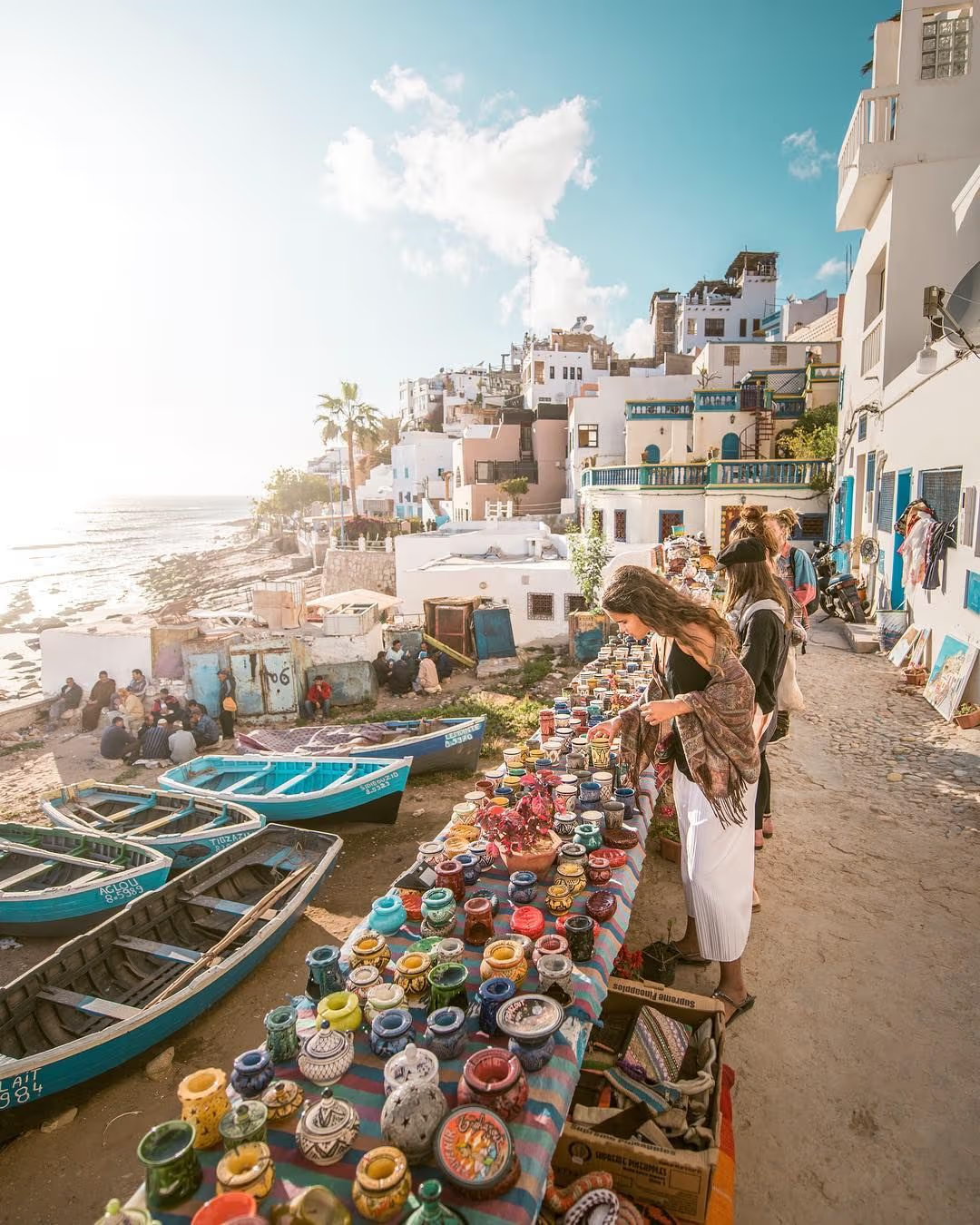
أفضل الأنشطة في أكادير وتغازوت: الدليل الشامل
من أمواج المحيط والتزلج على الرمال إلى شلالات وادي الجنة وطاجين اللحم الشهي، يغطي هذا الدليل كل ما تحتاجه للاستمتاع بأكثر سواحل المغرب إشراقاً.
 Agadir
أين تأكل في أكادير وتغازوت: ما يطلبه السكان المحليون فعلاً
انسَ أدلة المطاعم. هكذا نأكل فعلاً في أكادير وتغازوت: سمك بالوزن في الميناء، وأكشاك السوق للفطور، وكم يجب أن يكلّف الطاجين حقاً.
 Agadir
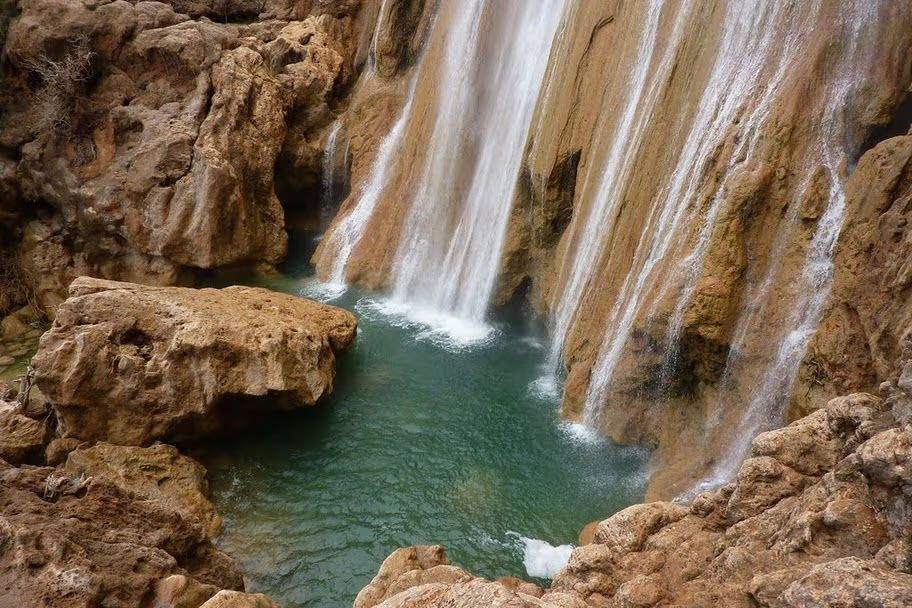
شلالات إموزار من أكادير: الدليل الصادق (ومتى يوجد ماء فعلاً)
شلالات إموزار في أبهى حالاتها من نوفمبر إلى أبريل، وتتحوّل إلى خيط رفيع بقية العام — إليك ما نخبر به ضيوفنا قبل الحجز، مع الحجّة الصادقة لزيارتها رغم ذلك.
النقاش
شارك تجربتك، اطرح سؤالًا، أو صحّح لنا معلومة — نقرأ كل تعليق.
كن أول من يشارك رأيه حول هذا المقال.