
From Agadir's beaches to Marrakech's souks to freezing Sahara nights — exactly what to pack for every setting and season in Morocco.
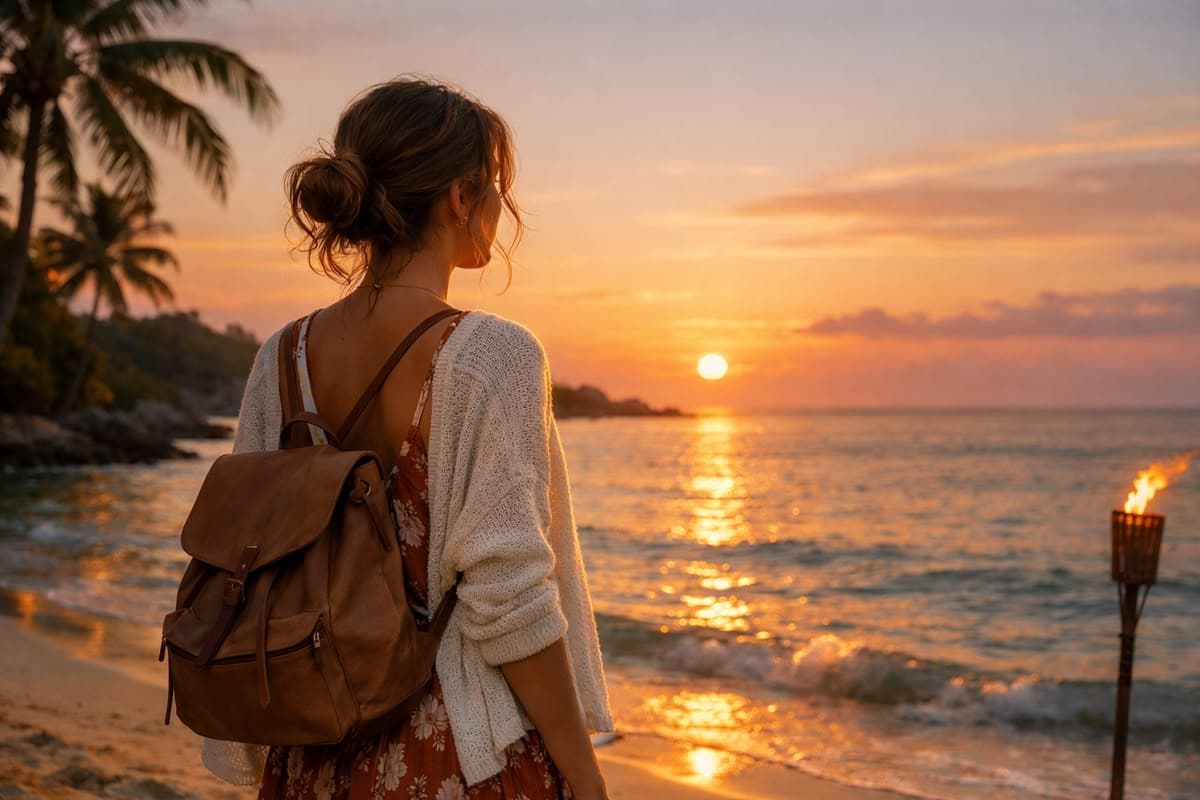
Morocco's dress code isn't a single rule — what works on Agadir's beach would be out of place in a Marrakech souk, and what's comfortable in the Sahara at noon is not what you'll want there at 4am. The good news: none of it requires special gear or a full wardrobe rethink, just a few smart choices for the settings you'll actually be in. Here's the practical, setting-by-setting breakdown.
Pack light, breathable layers you can add or remove as the day and location change, one modest cover-up option (a scarf, a long-sleeve shirt, loose trousers) for towns/mosques/markets, real walking shoes for medinas and hikes, and a warm layer if any part of your trip touches the desert or mountains after dark. That combination covers 95% of situations across Morocco.
Agadir and Taghazout are the most relaxed dress-code zones in the country — think European beach town, not conservative Morocco. Swimwear is completely normal on the beach itself and around beachfront hotel pools. The one local courtesy worth following: throw on a cover-up (t-shirt, sarong, shorts) when you leave the beach to walk through town or grab food, rather than wandering in just a bikini or swim trunks. It costs nothing and is genuinely appreciated in a town that's still partly a working fishing village.
For surfing specifically, a rash vest or 3/2mm wetsuit covers you year-round — surf schools provide these, so you don't need to buy your own unless you're particular about fit. Reef-safe sunscreen matters here more than almost anywhere in Morocco; the sun is intense and you're exposed for hours during a lesson.
Pack for beach/surf towns: swimwear, a cover-up, board shorts or quick-dry shorts, flip-flops for the beach + real shoes for town, sunscreen, a light jacket for evenings (the Atlantic breeze cools things down after sunset even in summer).
This is where modest dress genuinely matters — not because it's legally required for tourists, but because it changes how you're received. Shoulders and knees covered is the practical rule for both men and women: a t-shirt or light long-sleeve top, and trousers, a midi skirt, or knee-length shorts. You'll see plenty of tourists in tank tops and short shorts in Marrakech's main squares, and nothing bad happens — but covering up noticeably changes the tone of interactions in the souks, where haggling and conversation are part of the culture.
Footwear matters more than clothing here: medina streets are uneven cobblestone, sometimes wet from shop-cleaning or food stalls, and you'll be walking for hours. Closed, comfortable shoes beat sandals for a real day of souk exploring, even in summer heat.
Pack for cities/medinas: breathable t-shirts/long-sleeves, midi-length or looser bottoms, a light scarf (doubles as sun protection and quick coverage), comfortable closed shoes, a cross-body bag you can keep in front of you in crowded souks.
Most mosques in Morocco are not open to non-Muslim visitors (a notable exception is the Hassan II Mosque in Casablanca, which does offer tours). If you're visiting a site that is open, or simply passing through a neighborhood during prayer times, the expectation is stricter than general city wear: shoulders, knees, and often the chest area fully covered, and women may be asked to cover their hair with a scarf at specific religious sites. Carrying a lightweight scarf in your day bag solves this instantly, wherever you are.
Desert dressing is about temperature swings, not modesty — you'll experience the widest daily temperature range of your entire trip here. Daytime can hit 25–35°C depending on season, while desert nights (especially October–March) drop close to freezing. The classic solution locals and guides use is a cheich (a long cotton scarf wrapped around the head and neck) — it blocks sun and blown sand during the day and adds warmth at night, and most desert camps hand them out or sell them cheaply on-site.
Layers are non-negotiable for any multi-day Sahara circuit or overnight desert camp: a light top for midday, a warmer layer (fleece or light jacket) for the sharp evening temperature drop, and closed shoes rather than sandals — sand gets everywhere in open footwear, and gets surprisingly hot underfoot at midday.
Pack for desert trips: breathable long-sleeve top + trousers (also useful sun protection), a warm layer for nights, a scarf or cheich, closed walking shoes, sunglasses, high-SPF sunscreen, and a headlamp/torch (camp lighting is limited).
Spring/Autumn (March–May, September–November): the easiest season to pack for — light layers everywhere, a light jacket for evenings, no extremes to plan around. This is also generally the most comfortable season to travel in overall.
Summer (June–August): breathable, loose-fitting fabrics are your friend, especially inland (Marrakech regularly exceeds 40°C). Agadir's coastal climate stays milder, so summer packing differs meaningfully depending on whether your trip is coastal or inland — check when to visit Agadir specifically if that's part of your route.
Winter (December–February): Agadir and the coast stay mild (18–20°C daytime), but pack a proper jacket for evenings and for any desert or mountain excursion, where nights get genuinely cold. This is the one season where "Morocco is hot" packing advice can actively work against you if your itinerary includes the Sahara or Atlas.
Only in specific religious contexts (some mosque visits) — everyday city and beach dress doesn't require it. Carrying a lightweight scarf covers you for the exceptions without needing to plan around them constantly.
Yes, especially in Agadir/Taghazout and around hotel pools — shorts are completely normal there. In city medinas and more conservative towns, knee-length shorts are more comfortable socially than very short ones, though you won't be turned away either way.
Layers above all: a breathable top for daytime heat, a warm layer (fleece/jacket) for near-freezing desert nights, closed shoes rather than sandals, a scarf or cheich for sun and sand protection, and a headlamp since camp lighting is limited.
Not on the beach itself, especially in Agadir and Taghazout, where beachwear is entirely normal. It becomes a bigger deal only if you walk through town or into a restaurant still in swimwear — a quick cover-up when you leave the beach solves this completely.
Comfortable, closed walking shoes are the single most useful item to pack, whether for medina cobblestones, desert sand, or mountain trails. Sandals are fine for the beach itself but not for a full day of sightseeing or an excursion.
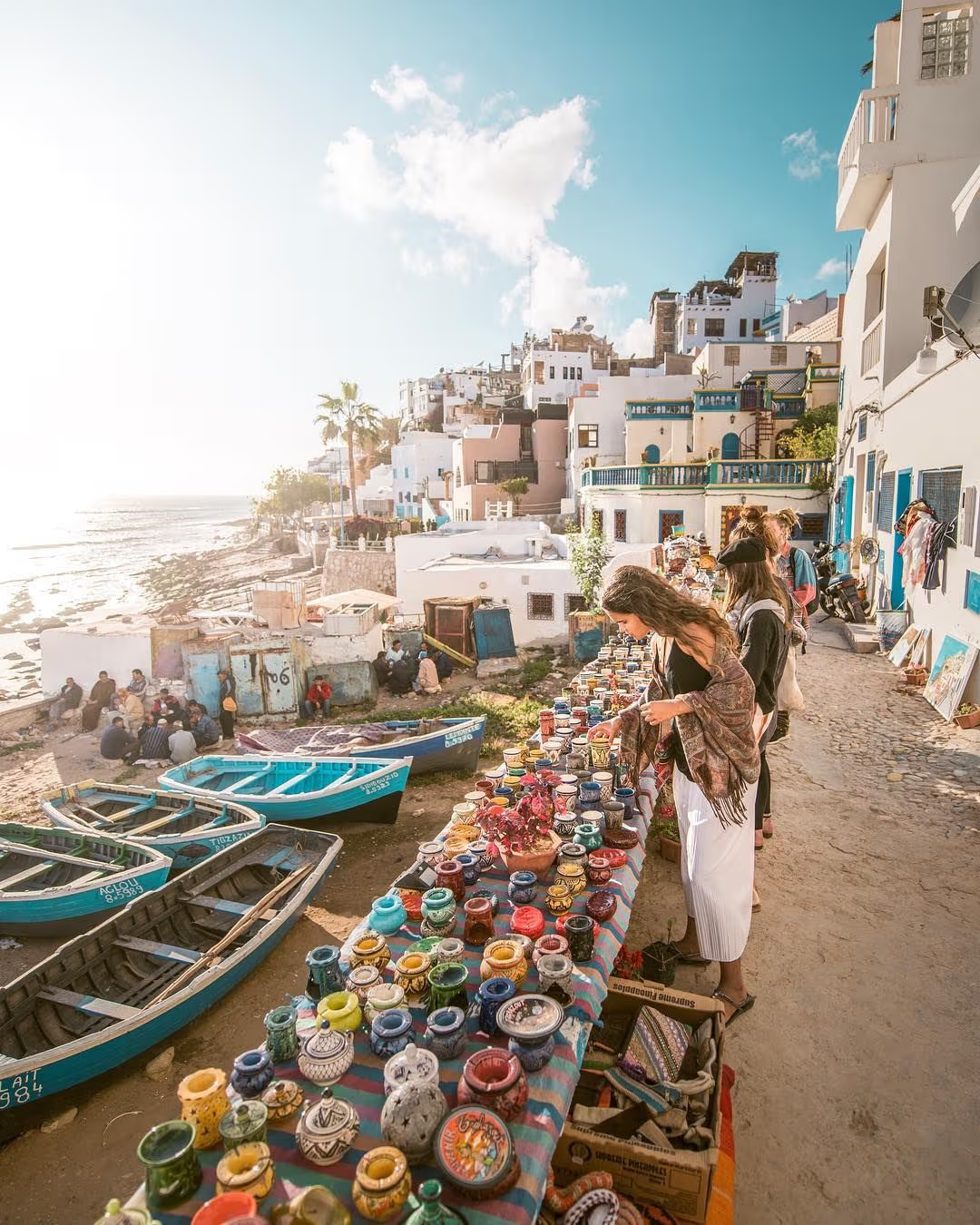
From surf breaks and sandboarding to Paradise Valley waterfalls and smoky lamb tagine, this guide covers everything you need to make the most of Morocco's sunniest coast.
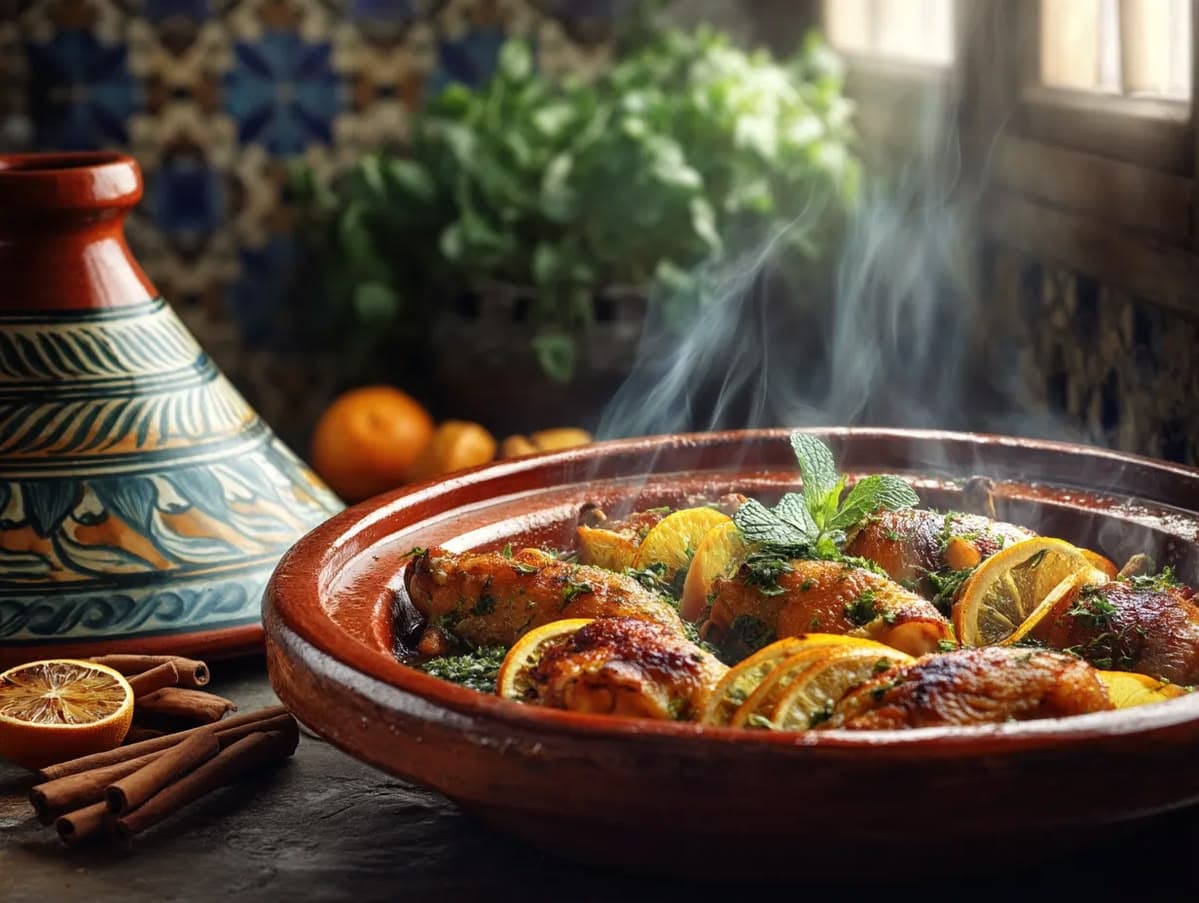
Forget restaurant guides. Here's how we actually eat in Agadir and Taghazout: fish by weight at the port, souk stalls for breakfast, and what a tagine should really cost.
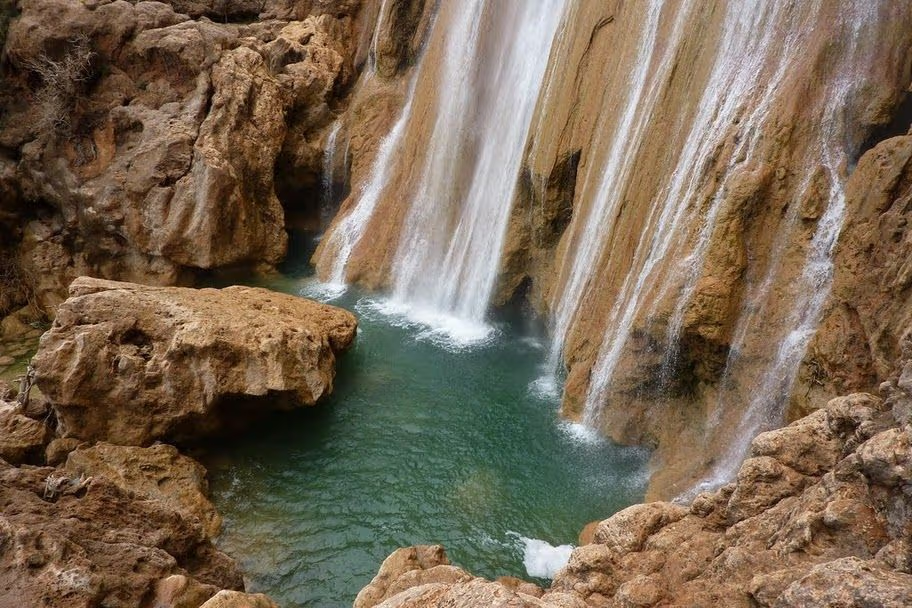
The Imouzzer waterfalls are at their best from November to April and a trickle the rest of the year — here's what we tell guests before they book, plus the honest case for going anyway.

Discussion
Share your experience, ask a question, or correct us — we read every comment.
Be the first to share your thoughts on this article.