
Agadir's month-by-month climate table, plus which months we'd pick for swimming, surfing, or a Sahara day trip, and which ones we'd steer flexible travelers away from.
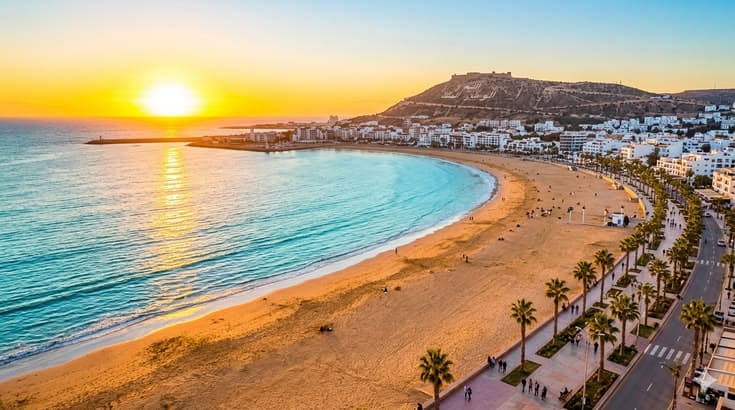
The short answer: May, June and September are Agadir's best all-round months, warm enough to swim, calm enough for a comfortable Sahara day trip, and priced below the July–August peak. If you're chasing winter sun rather than swimming weather, December through February works too — Agadir sits in a rain shadow that keeps it milder and drier than almost anywhere else on Morocco's coast, so even its quietest months are mild by most standards. Beyond that, the right month depends on what you're actually here for: beach days, surf, or an inland trip. The table below has the real numbers instead of guesswork.
Here's the month-by-month breakdown we send guests who ask what Agadir is actually like in a given month. Figures are averages compiled from Climates to Travel and cross-checked against Weatherspark's long-run station data, so expect a degree or so of year-to-year wobble either way.
| Month | Day High | Night Low | Sea Temp | Rain Days | Verdict |
|---|---|---|---|---|---|
| January | 21°C | 8°C | 17.5°C | 5 | Winter sun, sea too cold to swim |
| February | 22°C | 10°C | 17°C | 6 | Mild and dry, wettest month of the year |
| March | 23°C | 12°C | 17°C | 5 | Best hiking and sightseeing weather |
| April | 23°C | 13°C | 17.5°C | 4 | Warming up, still cool at night |
| May | 24°C | 15°C | 18.5°C | 1 | Swimmable, surf building, dry |
| June | 25°C | 18°C | 19.5°C | 1 | Our pick for best all-round month |
| July | 26°C | 19°C | 20.5°C | 0 | Peak summer, hot for inland trips |
| August | 27°C | 19°C | 21°C | 0 | Hottest month, busiest beaches |
| September | 26°C | 18°C | 21.5°C | 2 | Warmest sea, noticeably fewer crowds |
| October | 26°C | 16°C | 20.5°C | 4 | Surf season builds, still warm |
| November | 24°C | 13°C | 19.5°C | 5 | Cooling fast, good for desert trips |
| December | 22°C | 10°C | 18.5°C | 5 | Winter sun starts, book NYE early |
"Rain days" here means any day with measurable rainfall, not a washed-out day. Even in February, Agadir's wettest month, six rain days out of twenty-eight usually means a couple of hours of drizzle before the sun's back out. The city's reputation for near-year-round sunshine holds up against the numbers.
June through September is when the Atlantic actually cooperates. Sea temperature climbs from 19.5°C in June to a yearly peak of 21.5°C in September, since the ocean lags air temperature by six to eight weeks, so the warmest sea arrives after the hottest air, not during it. Air temperatures stay hot without tipping into Marrakech territory: Agadir rarely crosses 27–28°C even in August, while Marrakech regularly hits 40°C+ the same week.
September is the month we point beach-focused guests toward first. The sea is at its warmest of the year, crowds have thinned since the European summer holidays ended, and hotel rates start easing off their peak. If your dates are fixed to summer, July still works fine; just expect fuller beaches and a three-to-four-week lead time for popular restaurant tables.
Surf season splits cleanly into two. October to April brings the bigger, more powerful Atlantic swells (17–18°C water, more experienced-surfer terrain), while May to September brings smaller, friendlier swell (0.5–1.5m) in warmer water (19–23°C) that suits first-time surfers at Taghazout's beginner breaks. Our surf lessons run year-round because the various breaks along this stretch of coast stay workable even in winter, but if you're learning from scratch, May through September is the friendlier window.
Pricing hasn't moved much over the last couple of seasons: a two-hour group lesson runs 250–400 MAD (€25–40), a private lesson 600–900 MAD (€55–85), and a full week-long surf camp with accommodation 2,650–4,800 MAD (€250–450) per person, per our surf lessons cost breakdown. Board and wetsuit rental alone, if you already know what you're doing, runs 100–150 MAD (€9–14) a day.
If you're coming specifically for winter swell rather than to learn, November through February is when the reef breaks turn on properly. You'll want real surf experience and a thicker wetsuit for it: water sits at 17–18°C and the days are noticeably shorter than summer.
For a short desert taste close to Agadir, timing barely matters. The Timlaline dunes (the "Mini Sahara"), about 70 km north of the city near Aghroud, are a half-day round trip rather than an overnight in the Sahara proper, so even a hot afternoon is manageable with an early or sunset departure. We've written up what a sandboarding session there actually involves if you want the details; prices start from 473 MAD ([OWNER: confirm EUR]) for the sunset option, per our Sahara desert tours page.
For the real thing, multi-day circuits toward Merzouga and the Erg Chebbi dunes, timing matters much more. Spring (March–May) and autumn (October–November) are when we'd actually recommend booking: daytime temperatures inland run 18–28°C and nights 5–15°C, comfortable for long driving days and cold enough to justify a proper desert-camp blanket after dark. Our Sahara desert tours run year-round, including summer, but we'll say it plainly: May through September brings inland daytime temperatures of 35–45°C, and a ten-to-twelve-hour drive day in that heat is a real test even with good air conditioning. We still run the tours, since some travelers only have summer dates, but if yours are flexible, we wouldn't choose August for a Merzouga circuit.
Our own day-tour and lesson prices don't move with the season: sandboarding, surf lessons and multi-day Sahara trips cost the same in February as they do in August. What swings seasonally is everything around them. Flights and hotel rates follow the classic European school-holiday pattern — expensive in July–August and around Christmas/New Year, noticeably cheaper in March–April, late May, and November.
Booking pressure matters as much as price. In peak months, tours and popular restaurant tables need reserving three to four weeks out; in the shoulder months, a few days' notice is usually enough, and you'll have an easier time finding same-week availability if your dates change.
August is the one month we'd flag honestly for anyone with flexible dates. It's the hottest month on the table (27°C average, with afternoon spikes going higher), the busiest on the beaches, and the most expensive for flights and hotels. None of that makes it a bad month exactly; it's just the busiest, priciest version of Agadir on the calendar.
The other thing worth knowing about is the chergui, a hot, dry wind that blows in off the desert side of the Atlas and can push temperatures 10–15°C above the seasonal average for a day or two, most often in late summer and early autumn. It's not predictable enough to plan a trip around, but it's real: we've rescheduled sandboarding trips at Timlaline more than once when a chergui day turned a pleasant afternoon into a dust-blown, 40°C slog. If you're inland during one, treat it like a heatwave — less walking, more shade, more water.
January–February: The quietest tourism months and some of the best value of the year. Days are mild (21–22°C) and dry, good for Paradise Valley hikes or a Souss-Massa National Park morning safari before the heat builds. Evenings drop to 8–10°C, cold enough that we'd call a jacket essential rather than optional. February is technically the wettest month by rain-day count, but that means six days of light showers out of twenty-eight, not a washout.
March–April: The shoulder season we'd quietly recommend over anywhere else on the calendar. Warm enough to swim on a calm day, cool enough to hike without overheating, and hotel rates haven't hit summer peaks yet. If your travel dates are flexible, this is the best-value stretch of the year.
May–June: Reliable good conditions across the board, sea warming toward 19.5°C, small and mellow surf swells, long daylight hours, and lower prices than the July rush that follows. June is the month we'd recommend to a friend with no constraints on their trip.
July–August: Peak season, and for good reason. The hottest, driest, sunniest stretch of the year brings sea temperatures well into comfortable swimming range. The trade-off is crowds and cost — beaches fill up, popular restaurants need booking, and accommodation in both Agadir and Taghazout rises in price. Traveling with children in this window? Our Agadir with kids guide has timing advice for keeping midday heat from wrecking a family schedule.
September: Our pick for "August without the crowds or the price." Sea temperature peaks at 21.5°C this month, air temperatures ease slightly from August's high, and visitor numbers drop noticeably once European school holidays end.
October–November: Proper surf season begins as Atlantic swells build, drawing more experienced surfers while beginner-friendly spots keep working. Day-trip weather is close to ideal, warm without heat, and this is one of the two strongest windows (with spring) for a multi-day Sahara circuit, since Merzouga's brutal summer heat has broken by October.
December: Bookended by winter-sun arrivals and the holiday season. We cover the specifics of that stretch (flight patterns, what's open over the holidays, realistic packing) in our Agadir in December and January guide. Christmas and New Year bring a real spike in European visitors, so book transfers and popular tours (sandboarding, Paradise Valley) well ahead if you're traveling over the holidays.
Ramadan's dates shift every year (it follows the lunar calendar, moving about ten to eleven days earlier annually), and it affects daytime restaurant and café hours in the medina and smaller towns more than it affects tours themselves. Guided excursions, transfers and hotels operate normally throughout. Expect some local eateries closed until sunset, a quieter daytime atmosphere in town, and a livelier-than-usual evening (iftar) scene after dark. If full restaurant availability along the route matters to you on a multi-day desert circuit, it's worth checking our Sahara desert tours page or asking us directly before booking dates that land during Ramadan.
August, averaging 27°C by day, occasionally higher on chergui days. It's hot but rarely extreme, since the Atlantic keeps Agadir several degrees cooler than inland cities like Marrakech, which regularly passes 40°C in summer.
January, with average days around 21°C and nights dropping to 8°C. Even at its coldest, Agadir stays milder than most of Europe in winter, which is exactly why it's a long-running winter-sun destination for Northern Europeans.
Yes, relative to almost anywhere else in Morocco or Europe. Daytime temperatures rarely drop below 20–21°C even in the depths of winter, though nights can fall to 8–10°C, cold enough that packing a jacket for evenings is worth doing regardless of the month.
From May through October, the sea holds above 18.5°C, with July through September the warmest (20.5–21.5°C). Cold-water swimmers manage year-round, but for a comfortable swim without a wetsuit, June through September is the real window.
Not in the way most people mean it. Agadir gets roughly 280–290mm of rain a year, concentrated in light showers between November and March, with February the wettest month at around six rain days. There's no monsoon-style wet season — even February's rain days are usually a few hours of drizzle rather than an all-day washout.
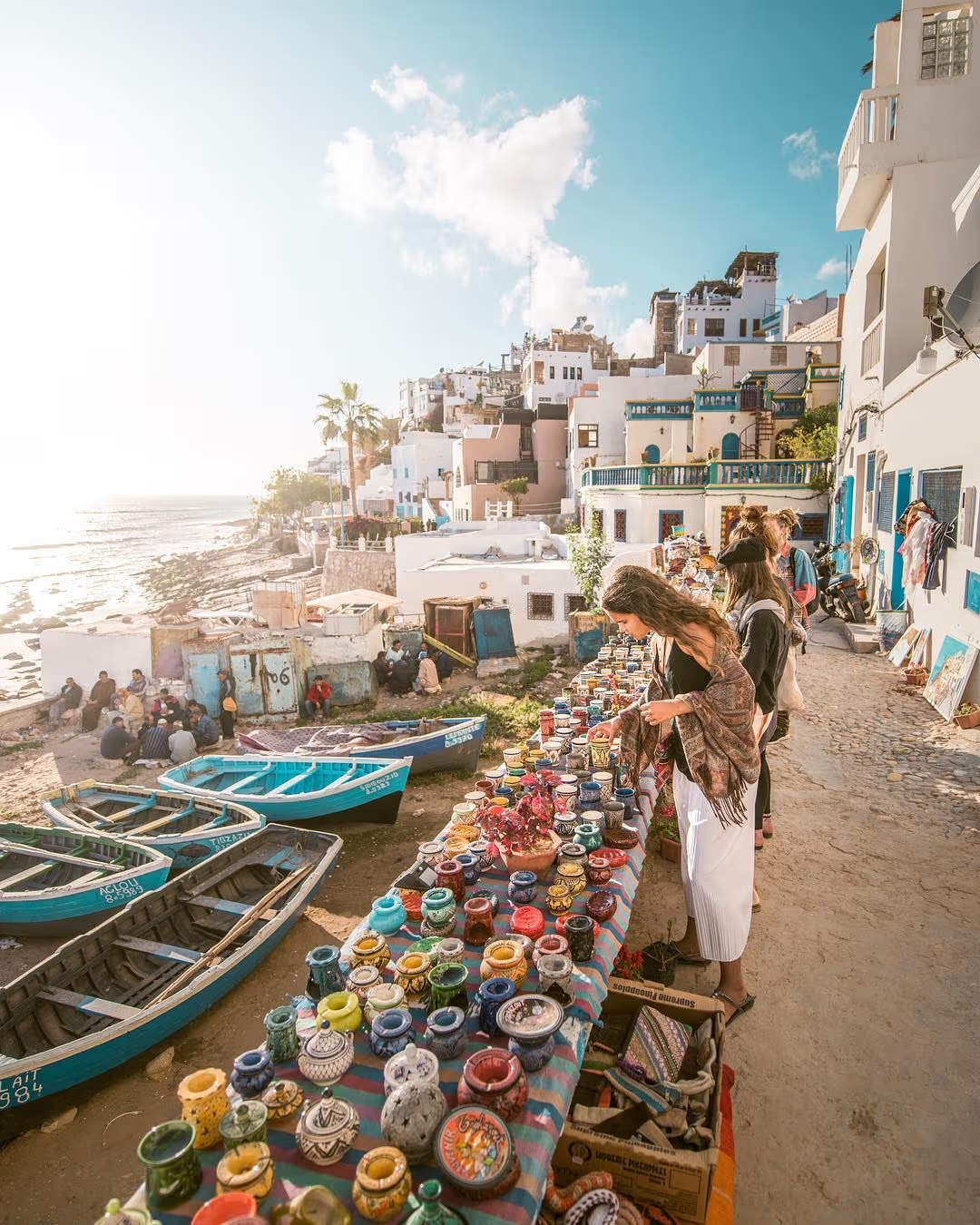
From surf breaks and sandboarding to Paradise Valley waterfalls and smoky lamb tagine, this guide covers everything you need to make the most of Morocco's sunniest coast.

Forget restaurant guides. Here's how we actually eat in Agadir and Taghazout: fish by weight at the port, souk stalls for breakfast, and what a tagine should really cost.
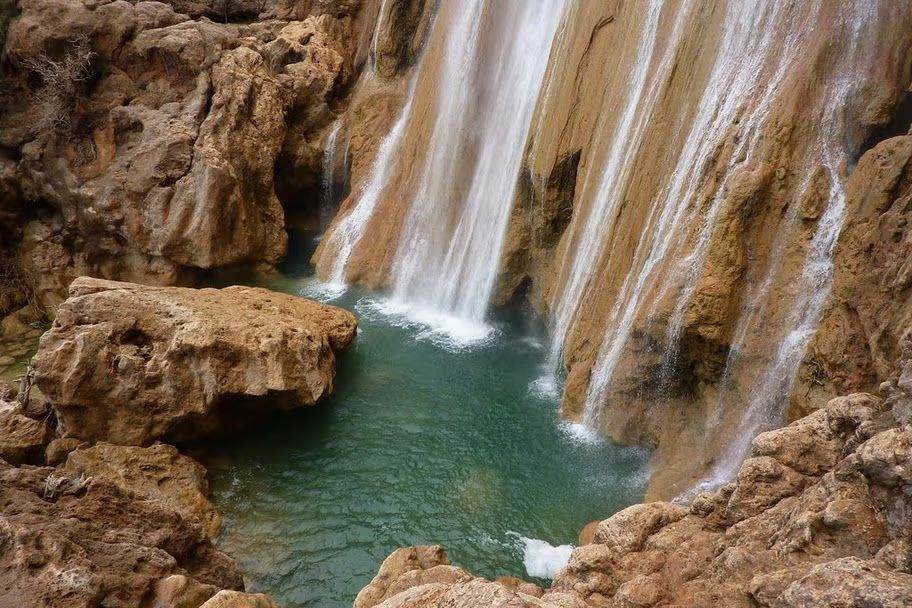
The Imouzzer waterfalls are at their best from November to April and a trickle the rest of the year — here's what we tell guests before they book, plus the honest case for going anyway.

Discussion
Share your experience, ask a question, or correct us — we read every comment.
Be the first to share your thoughts on this article.