
Forget restaurant guides. Here's how we actually eat in Agadir and Taghazout: fish by weight at the port, souk stalls for breakfast, and what a tagine should really cost.
# Where to Eat in Agadir & Taghazout: What Locals Actually Order
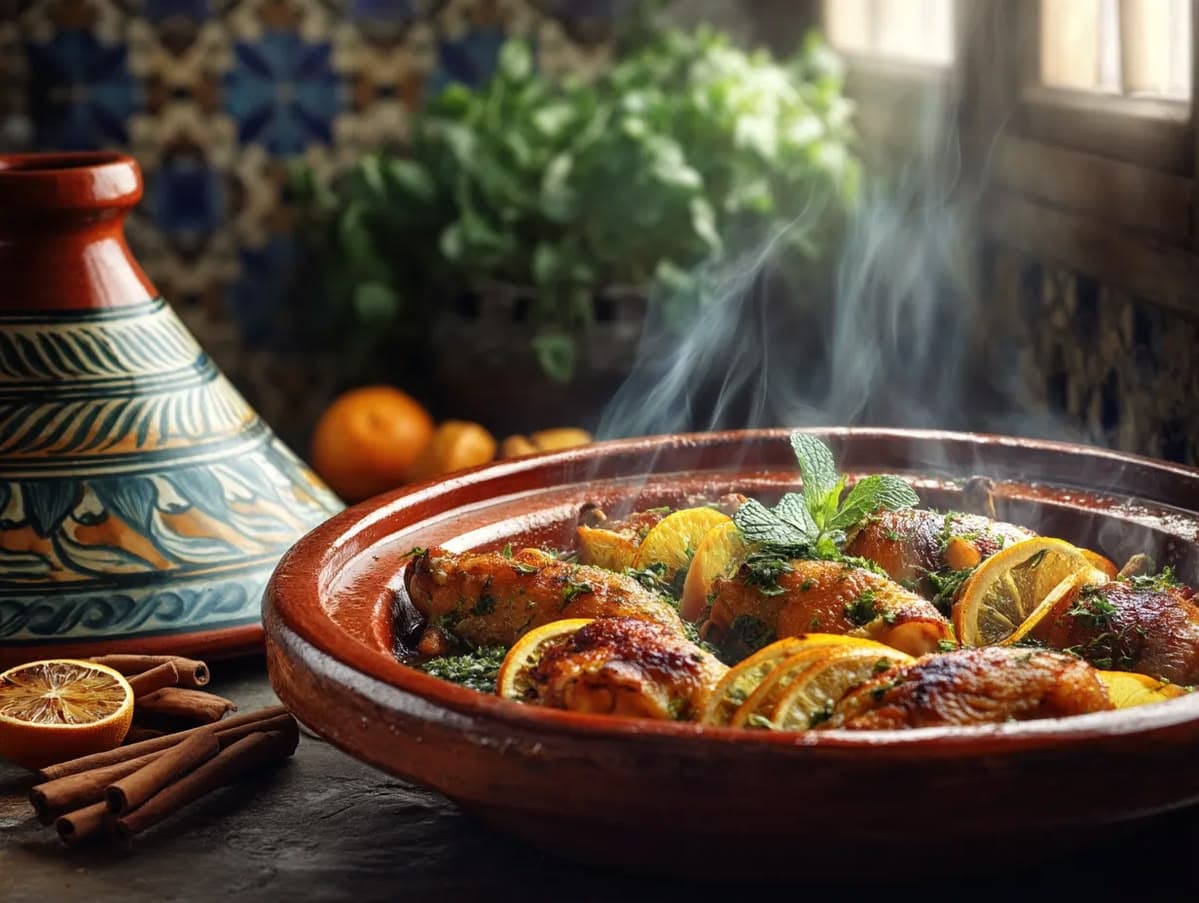
The best meals in Agadir rarely come with a laminated menu: grilled fish by weight at the port, msemen off a hot plate in Souk El Had, a tagine eaten with torn bread in Nouveau Talborjt. None of it needs a reservation. Street food runs about 5-30 MAD (EUR 0.45-2.80), a sit-down tagine 35-160 MAD (EUR 3.25-15) depending on the street, and grilled fish from around 40 MAD (EUR 3.75) a kilo for sardines up to 180 MAD (EUR 17) for sea bream. What changes the bill more than the food is which street you're on.
We run trips out of Agadir and Taghazout every week and keep coming back to the same handful of stalls, not for lack of options, but because that's where the food is actually good. This guide extends the food section of our ultimate guide to Agadir and Taghazout, which covers what to eat; this one covers where, how much, and how ordering works.
Agadir's port has a fish market at one end and a row of grill stalls at the other, and the system is the same at all of them. Walk the ice tables, pick your fish (sardines, dorade, sea bream, squid, prawns in season), and the stall weighs it and quotes a price per kilo before it touches the grill. They plate it with bread, olives, and a side salad, and add a small grilling fee, usually 10-20 MAD (EUR 0.95-1.90), on top.
Sardines are the cheap option at 40-60 MAD (EUR 3.75-5.60) a kilo; sea bream and bass cost more, typically 120-180 MAD (EUR 11-17). A shared sardine lunch for two, about a kilo plus the grilling fee and sides, runs roughly 50-80 MAD (EUR 4.65-7.45) per person. None of it is negotiable the way a souk carpet might be: one of our drivers tests new stalls for a discount and gets the same polite refusal every time, because the price per kilo is fixed and posted.
Our ultimate guide points to Souk El Had for prices; here's what to actually order once inside. The food stalls cluster near the main entrances rather than deep in the market. Msemen, a folded, pan-fried flatbread, comes off the griddle hot for 3-6 MAD (EUR 0.30-0.55) a piece and is the closest thing Agadir has to breakfast street food. Harira, the tomato-lentil soup most people associate with Ramadan but sold year-round, costs 6-12 MAD (EUR 0.55-1.10) a bowl and works as a full light meal with the bread that comes with it.
The olive rows deserve ten minutes even if you buy nothing. A dozen cures sit side by side, and most stallholders hand you a taste before you commit to a bag. Fresh juice stands squeeze orange and, in season, pomegranate or avocado, for 5-10 MAD (EUR 0.45-0.95) a glass. Bring small coins: most stalls can't break a 200 MAD note over a 5 MAD harira.
Nouveau Talborjt is Agadir's actual residential neighborhood, not a tourist zone, and the food reflects that. Rotisserie chicken counters sell a quarter chicken with fries and bread for 20-30 MAD (EUR 1.90-2.80), and small sandwich stands do merguez or kefta rolls for 15-25 MAD (EUR 1.40-2.35). Bissara, a fava bean soup finished with olive oil and cumin, runs 5-10 MAD (EUR 0.45-0.95) and is the local answer to a cold morning.
Few of these places have English menus, and some have no written menu at all; pointing at what the next table is eating works fine. If you're traveling with children and want a low-stress dinner away from the seafront, Nouveau Talborjt is the better bet; we cover more family logistics in our guide to Agadir with kids.
The beachfront terraces along Agadir's promenade are pleasant, and part of what you pay for is the chair and the view, not the food. A chicken tagine costing 130-160 MAD (EUR 12-15) on the promenade is frequently the same dish for 45-60 MAD (EUR 4.20-5.60) one street back, cooked in the same clay pot by someone who isn't covering beachfront rent. That's not a knock on the promenade restaurants; the sea air and people-watching are worth something to plenty of travelers. It just means the price gap is about location, not what's in the pot.
Our usual advice to guests: sit on the promenade for a coffee or a sunset drink, then walk one block inland for the meal itself. You eat better for less, and the walk shows you more of the neighborhood than the terrace does.
Taghazout has changed a great deal since 2018, when we started running trips here. The surf-café strip now serves smoothie bowls, avocado toast, and proper flat whites at prices closer to Lisbon than rural Morocco, typically 60-100 MAD (EUR 5.60-9.30) for a full brunch plate. That's not a complaint; if you want good coffee on this coast, that's where to get it. A few older fish shacks toward the harbor end still grill the morning catch the way they did before the surf crowd arrived, and a full fish meal there, tea included, runs 50-90 MAD (EUR 4.65-8.40).
Tamraght, one village south, holds onto more of that older character and is worth a short taxi ride if Taghazout feels too polished. If you're booking a surf lesson or a coastal day out, our Taghazout tours page has the current lineup, and most of those days stop for lunch at exactly this kind of shack, not the smoothie-bowl cafés.
A few habits make a shared meal easier, at a host family's table, on a tour, or at an ordinary restaurant. Bread is the utensil for most of the meal: tear a piece, use it to scoop, and save the fork for rice or salad if either is provided. Everyone eats from the section of the shared plate nearest them rather than reaching across, so wait for your section to empty before working toward the center.
Mint tea comes at the end, poured from height to raise a light foam, and the custom is to accept at least two glasses; declining after the first can read as rushing your host. That style of tea, and the argan oil in amlou at breakfast, sit inside a food culture UNESCO recognized in 2014, when it inscribed the know-how surrounding Morocco's argan tree as intangible cultural heritage.
Prices move with the season and with proximity to the beach, but this is a fair range based on what we see guests actually pay.
| Item | Typical Price (MAD) | Approx. EUR | Where |
|---|---|---|---|
| Tagine, local eatery | 35-60 | 3.25-5.60 | One street back from the beach |
| Tagine, seafront terrace | 90-160 | 8.40-15 | Agadir promenade |
| Grilled sardines (per kg) | 40-60 | 3.75-5.60 | Agadir port |
| Grilled sea bream or bass (per kg) | 120-180 | 11-17 | Agadir port |
| Mint tea | 5-15 | 0.45-1.40 | Varies by venue |
| Moroccan Cooking Class | 870 | ~81 | Yallah Morocco, per person |
These are ranges, not guarantees: a slow fishing week can push port prices up, and a full Friday can mean a wait for a table one street back from the beach.
Vegetarian eating in Agadir is easier than it looks and harder than it sounds. Vegetable tagines and couscous are on nearly every menu and are usually excellent, but broth-based soups like harira are sometimes made with a meat stock even when the bowl looks vegetarian, so ask if that matters to you. Salads, bread, olives, and the souk's produce stalls make it easy to eat well without meat; strict vegan eating is harder, since butter and honey turn up in unexpected places, including some versions of amlou.
During Ramadan, daytime hours flip: most local restaurants and street stalls close until the sunset call to prayer, when everything reopens at once for iftar. Plan on hotel breakfast and eating out after dark, or ask your riad to arrange a meal; a lunch spot in Nouveau Talborjt at 1 PM will mostly mean closed shutters.
If you'd rather learn the food than just order it, we run a Moroccan cooking class every week out of a village north of Agadir, starting exactly where this article does: at a local market, choosing ingredients before anything gets cooked. The day runs 10 AM to about 3 PM, five hours, opening with Moroccan tea and an omelet while the fire gets going, before the main event: a tajine you build yourself, from market stall to clay pot. It's 870 MAD per person (about EUR 81), including breakfast, lunch, mint tea, and hotel or port pickup, groups of one to twenty.
It isn't the cheapest way to eat well in Agadir for a day, and if you've already cooked with a host family, or you're short on time, the port and souk teach you almost as much for a fraction of the price. But to understand why a tajine takes the shape it does, five hours over a real fire is worth the gap. For everything else worth building into the trip, our Agadir tours page lists the day trips we run.
Street snacks run 5-30 MAD (EUR 0.45-2.80), a tagine at a local eatery is 35-60 MAD (EUR 3.25-5.60), and the same tagine on the seafront promenade runs 90-160 MAD (EUR 8.40-15). Budget 60-100 MAD (EUR 5.60-9.30) for a relaxed lunch away from the beachfront.
Yes, with the same judgment you'd use at any busy market: go where turnover is high and the queue is local, not empty. Stalls at Souk El Had and Nouveau Talborjt serve hundreds of regulars daily, keeping ingredients moving.
Walk the ice tables, choose your fish, and the stall weighs it and quotes a price per kilo before grilling. Sardines are cheapest; sea bream and bass cost more. The grilling fee, usually 10-20 MAD (EUR 0.95-1.90), is separate from the fish price.
The surf-café strip near the main beach has the best coffee and brunch plates. The older fish shacks toward the harbor end serve a full, cheaper meal, and Tamraght, one village south, is quieter if Taghazout's strip feels too built up.
Some hotel restaurants and a handful of seafront venues do, but most local restaurants and souk stalls don't. If a drink with dinner matters, check ahead rather than assume, or plan on your hotel bar.
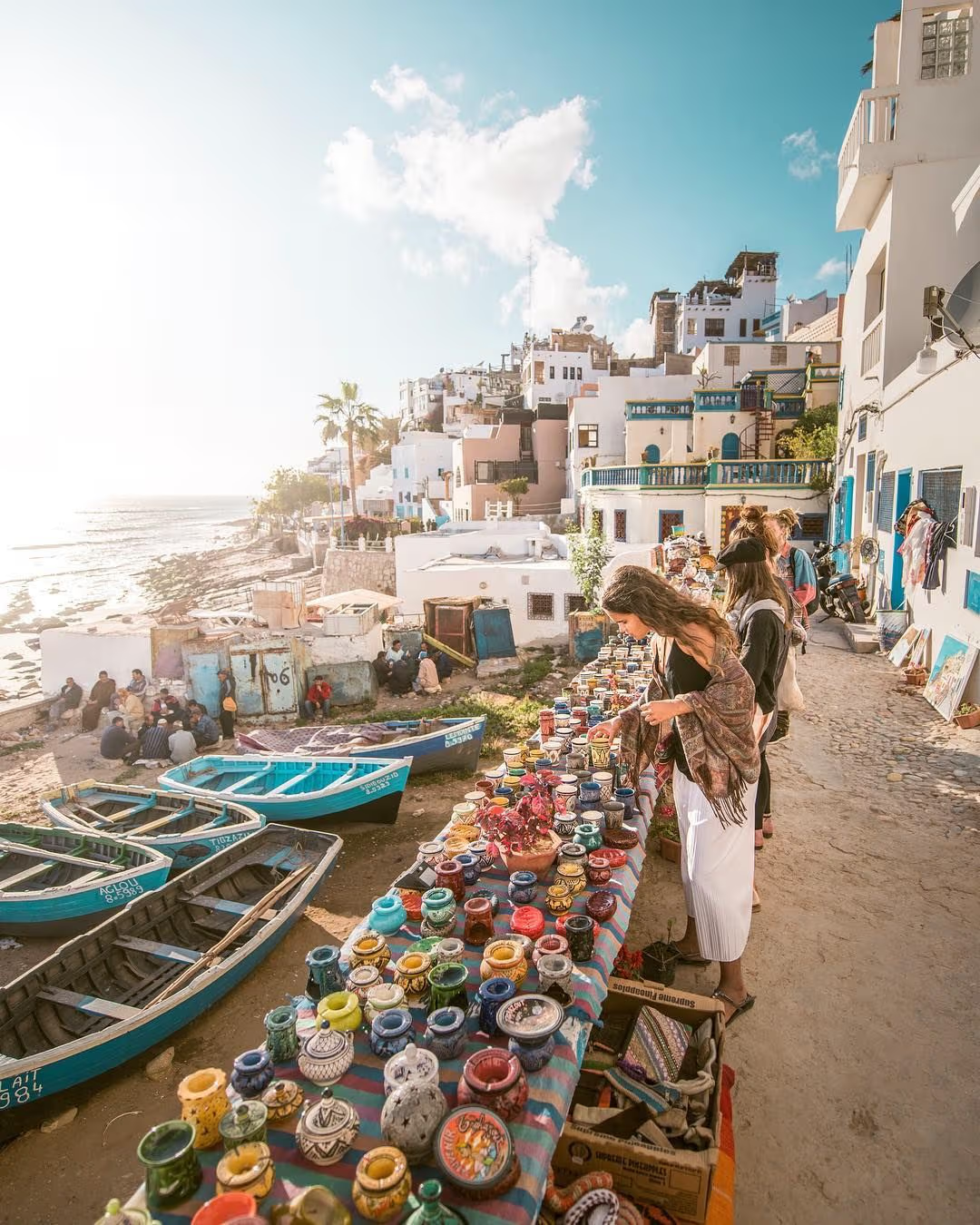
From surf breaks and sandboarding to Paradise Valley waterfalls and smoky lamb tagine, this guide covers everything you need to make the most of Morocco's sunniest coast.
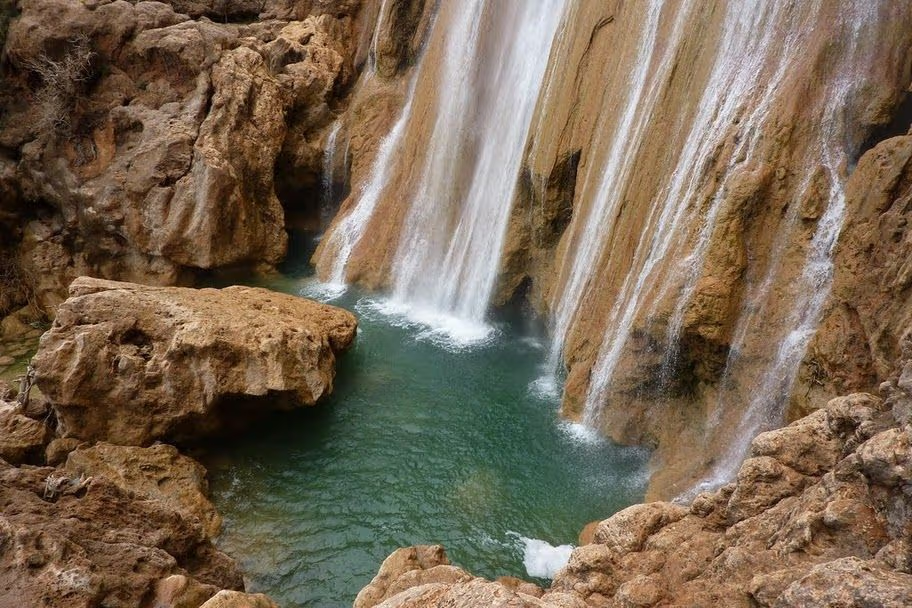
The Imouzzer waterfalls are at their best from November to April and a trickle the rest of the year — here's what we tell guests before they book, plus the honest case for going anyway.

South of Agadir, Souss-Massa National Park protects one of the rarest birds on the planet alongside flamingos, gazelle, and a reintroduction program for desert antelope. Here's what an honest visit looks like, guide included.

Dyskusja
Podziel się doświadczeniem, zadaj pytanie lub popraw nas — czytamy każdy komentarz.
Bądź pierwszą osobą, która podzieli się opinią o tym artykule.