
An Essaouira day trip from Agadir means about six hours of driving for three hours in the medina, so it isn't for every trip. Here's who it suits, what it costs three different ways, and what the wind actually does to your afternoon.
# Is an Essaouira Day Trip From Agadir Worth It?
Yes, if you have at least four or five days based in Agadir or Taghazout and want a full dose of medina, working port and Atlantic wind without changing hotels. Skip it if your trip is three nights or shorter, or if six hours in a minivan sounds like a chore rather than part of the day, because that's roughly the trade: about six hours of driving bookending three hours on the ground in Essaouira. We run this route most weeks of the year, and the guests who come back happy are the ones who wanted the town itself, not extra beach time they could have had closer to Agadir.
The short version: Essaouira sits about 175 km up the coast on the N1, roughly three hours each way in normal traffic. Below, we break down what a day trip like our Essaouira tour actually costs against self-driving or taking the bus, what the hours look like end to end, and why almost every guest asks about the wind before they ask about the medina.
Essaouira is 175 km north of Agadir on the N1 coast road, which our Essaouira destination guide puts at about three hours each way in normal traffic. That figure holds up against independent route planners, which put the same drive at 170–175 km and roughly three to three and a half hours depending on how much truck traffic you catch around Tamanar.
The road is a two-lane national highway the whole way, not a motorway, so there's no toll and no shortcut. It hugs the coast for long stretches, past Tamri's banana plantations, then swings slightly inland through argan scrubland before dropping back down into town. The bends around Cap Ghir are the one section where anyone prone to motion sickness should take a tablet before departure, not after.
Add the 20-minute stop we make at an argan cooperative on the way up (more on that below), and the round trip is closer to six hours of driving inside an 11-hour day. That's the number to sit with before booking: about three hours in Essaouira for six hours getting there and back.
There are three realistic ways to make this trip, and the price gap is bigger than most people expect.
| Guided day tour | Self-drive (rental car) | Souk to Surf shuttle bus | |
|---|---|---|---|
| Price per person | 478 MAD (~€45) | ~175–350 MAD (~€16–33), depending on group size | 193 MAD (~€18) one-way; 385 MAD (~€36) return |
| Drive time | ~3h each way, done for you | ~3h each way, you're driving | ~4h each way, fixed timetable |
| Pickup | Hotel, or the gate at Agadir's new port | Rental desk in Agadir or Taghazout | Fixed stop, not your hotel |
| What's included | A/C vehicle, guide, argan cooperative stop, hotel drop-off, fees | Nothing beyond the car and fuel | Nothing beyond the seat |
| Best for | First visit, no car, want commentary | Groups of 3–4 splitting fuel and rental | Solo, budget-focused, or one-way trips |
The tour price of 478 MAD (~€45) per person on our Essaouira day trip covers the vehicle, guide, hotel pickup and drop-off, the cooperative stop, and all fees. You pay for your own lunch in Essaouira, which is worth doing anyway (more on that below).
Self-driving only wins on price if you fill the car. Economy rentals in Agadir run from roughly 370 MAD (~€35) a day, and the round trip burns about 20 liters of petrol, another 275–300 MAD (~€26–28) at current pump prices. Split a roughly 670 MAD (~€63) day between four people and you're under 175 MAD (~€16) each, cheaper than the tour. Split it between two, and you're close to what the tour costs anyway, minus the guide, the cooperative stop, and anyone else doing the driving after a long day on your feet.
The cheapest door-to-door option is the Souk to Surf shuttle, a minibus service running Agadir to Essaouira twice a day (9:25am and 3:45pm at the time of writing) for about 193 MAD (~€18) one-way. It's a real minibus with air conditioning and a tourism license, not a shared grand taxi, but it drops you at a fixed stop rather than a riad door, runs on its own schedule rather than yours, and skips the guide and the cooperative stop. Public intercity coaches (CTM, Supratours) cover the same route for less again, but from Agadir's bus station rather than a hotel pickup, on a timetable that wasn't built around a day trip.
Exact pickup time is confirmed when you book, but most departures leave Agadir and Taghazout hotels between 7:00 and 7:30am. Here's roughly how the day unfolds on the tour we run:
That's an 11-hour window built for a group of up to 15, run in Arabic, English, French, Spanish or German depending on your guide. It's a full day. Guests who try to stack a big dinner out or a sunrise surf lesson onto the same day tend to end up skipping one or the other.
Essaouira is windier than Agadir, and it's windier in the afternoon than the morning, which matters more for your packing list than the season does. Windfinder's station data for the town puts the long-run average around 8 knots, a moderate breeze, but that's smoothed across a full year and every calm early morning included. Locals will tell you the real wind shows up from late morning through sunset, most reliably April to September, which is exactly the window a day trip from Agadir sits inside.
The question we get most at the pickup point in July isn't about the medina. It's whether people need a jacket. The answer is yes, even in August. Bring a light windbreaker or a fleece you can tie around your waist for the drive, not a heavy coat. Long skirts and loose scarves fight you on the ramparts. Sunglasses that actually stay on your face beat a sunhat, which won't survive the Skala walls. If you're hoping to try kitesurfing rather than just watch it from the beach, the same wind that ruins a sunhat is exactly why this stretch of coast draws riders from across Europe.
Morning arrivals get calmer photos at the ramparts and the port before the wind and the tour groups both pick up. That's one more reason the early pickup time is worth keeping, even on holiday.
Essaouira's medina earned UNESCO World Heritage status in 2001. According to UNESCO's own listing, it's "an exceptional example of a late-18th-century fortified town" built to European military design but finished with distinctly Moroccan craft and layout. Morocco's National Tourist Office calls the town the "Bride of the Atlantic", a marketing line that turns out to hold up once you've stood on the ramparts at low tide.
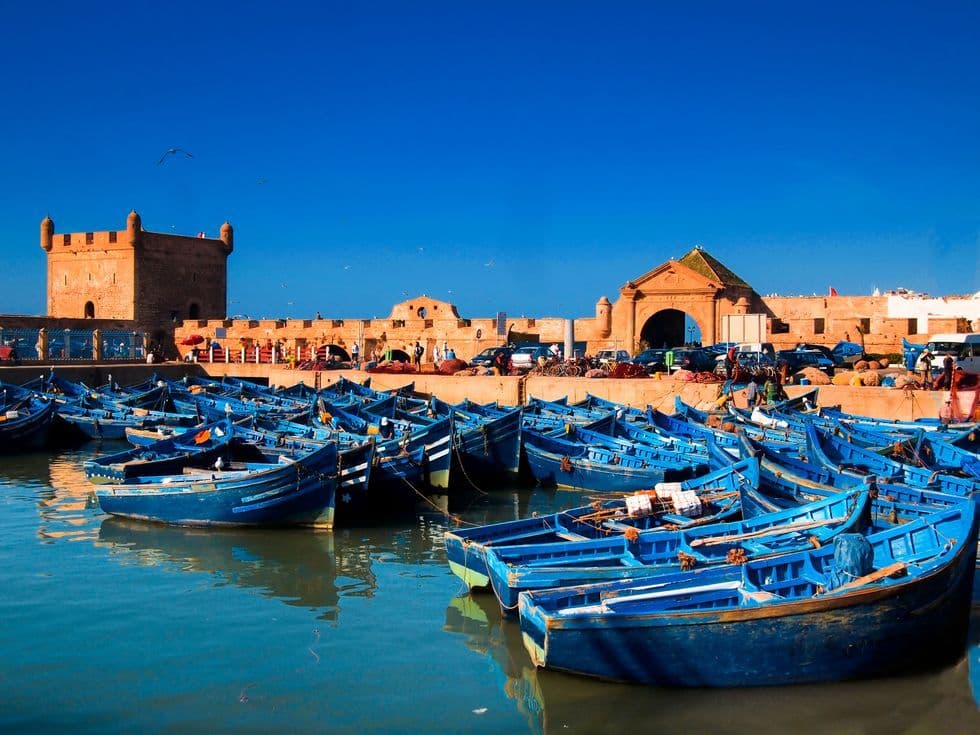
The Skala de la Ville and Skala du Port are the two 18th-century fortified sea walls, both still lined with old cannons and both free to walk. The historic gate by the water, Bab El Marsa, once controlled every cargo load moving in or out of the port. That port below is not staged for visitors. It runs on its own schedule, with blue fishing boats coming in through the morning and stalls grilling whatever came off them by early afternoon. This is where most of our guests eat lunch, standing up, pointing at fish.
The medina itself is smaller and easier to navigate than Marrakech's, built around woodworking souks (thuja wood marquetry is a local specialty), art galleries, and narrow streets that stay in shade most of the day, useful once the wind is up. Gnaoua musicians, descendants of West African communities brought to Morocco generations ago, play in small squares and cafes year-round, though the town is loudest with music during its Gnaoua World Music Festival, usually held in June. If music matters to you more than a quiet day trip does, that's worth timing a longer Morocco visit around.
Our regular stop on the way up is Cooperative Marjana, a real women's argan oil cooperative, not a prop. You'll see the nuts cracked and the paste pressed by hand, the same slow process that makes argan oil expensive everywhere outside Morocco. It's also, honestly, set up to sell you a bottle before you leave, and every tour operator on this road stops at a cooperative for the same reason.
Both things are true at once: the cooperative model funds real income for the women working there, and the 20-minute stop is built with a shop on the way out. Buy something if the price and the product both look right to you (cold-pressed culinary argan oil should smell faintly nutty, not rancid). Skip it if you'd rather not, and just say so. No one on our tours has to buy anything to get back on the van.
A few situations where we'd talk a guest out of this trip rather than into it:
Your whole visit is three nights or shorter. Eleven hours is a large share of a short trip, and you'll feel it the next morning.
You get carsick on winding roads. The N1 has enough curves around Cap Ghir that this matters, and no amount of coastline fixes a bad stomach.
You're already routing between Agadir and Marrakech. Essaouira sits almost on that road anyway. Our guide to choosing between Agadir and Marrakech covers combining the two; if Marrakech is already on your itinerary, a Marrakech–Essaouira leg is shorter than doubling back from Agadir.
You want a relaxed beach day more than a walled town. Agadir's own beach, or a shorter option from our other day trips from Agadir and Taghazout, costs less time and less driving.
If none of that describes you, our full breakdown of what Morocco day trips cost from Agadir puts this one near the affordable end of the range, which is usually the deciding factor once the drive time stops being the objection.
Yes, for most travelers with at least four or five days in the area. The medina, ramparts and port are some of the most distinct scenery in Morocco, and nothing comparable exists closer to Agadir. The trade-off is honest: about six hours of driving for three hours on the ground, so it suits travelers with time to spare more than a short weekend break.
Essaouira is about 175 km from Agadir on the N1 coast road, roughly three hours each way in normal traffic. Add stops (the argan cooperative, photo breaks, traffic near Tamanar) and a round trip runs closer to six to seven hours total.
The Souk to Surf shuttle bus runs twice daily for about 193 MAD (~€18) one-way, and public coaches (CTM, Supratours) run for less again from Agadir's bus station. Both are slower and less convenient than a door-to-door tour, since neither includes hotel pickup, a guide, or the argan cooperative stop.
A light windbreaker or fleece, not a heavy coat, plus sunglasses that stay on your face rather than a sunhat. The wind is mildest in the morning and picks up from late morning through sunset, most noticeably April to September.
One day comfortably covers the medina, ramparts, port and a seafood lunch on our day trip. Stay overnight instead if you want sunset from the ramparts without a return drive, want to try kitesurfing properly, or want to see Essaouira outside the middle of the day, when the tour groups (including ours) are in town.
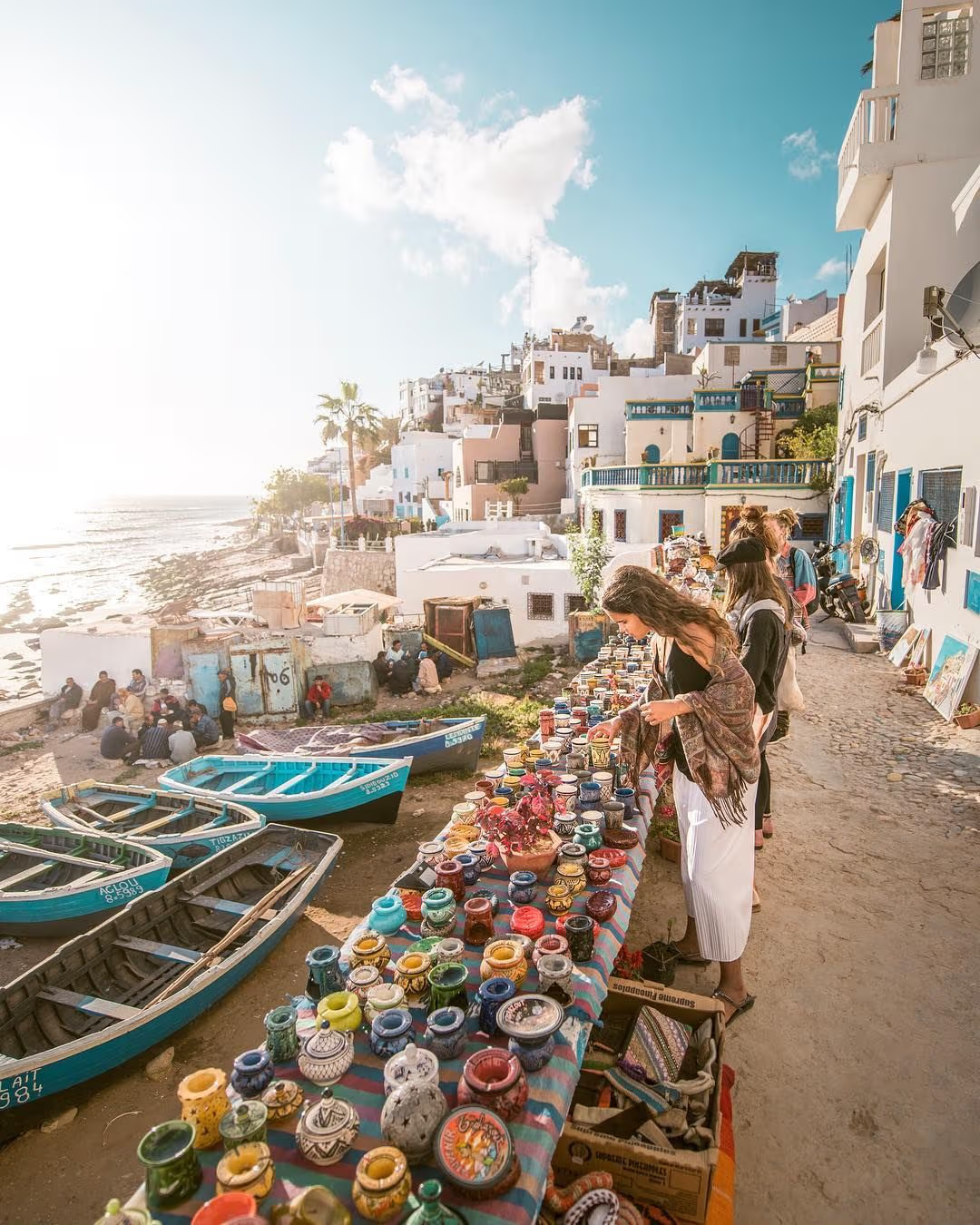
From surf breaks and sandboarding to Paradise Valley waterfalls and smoky lamb tagine, this guide covers everything you need to make the most of Morocco's sunniest coast.

Forget restaurant guides. Here's how we actually eat in Agadir and Taghazout: fish by weight at the port, souk stalls for breakfast, and what a tagine should really cost.
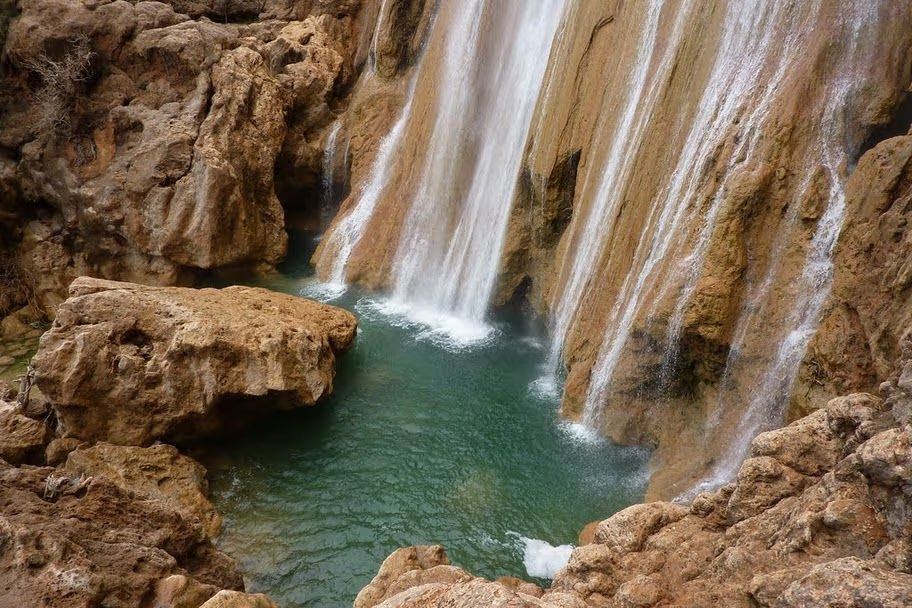
The Imouzzer waterfalls are at their best from November to April and a trickle the rest of the year — here's what we tell guests before they book, plus the honest case for going anyway.

Обсуждение
Поделитесь опытом, задайте вопрос или поправьте нас — мы читаем каждый комментарий.
Будьте первым, кто поделится мнением об этой статье.