Taghazout
Taghazout Surf Guide for First-Timers: Everything You Need to Know
Never stood on a surfboard? Taghazout's warm sun, mellow beach breaks and world-class instruction make it one of the best places on earth to learn.

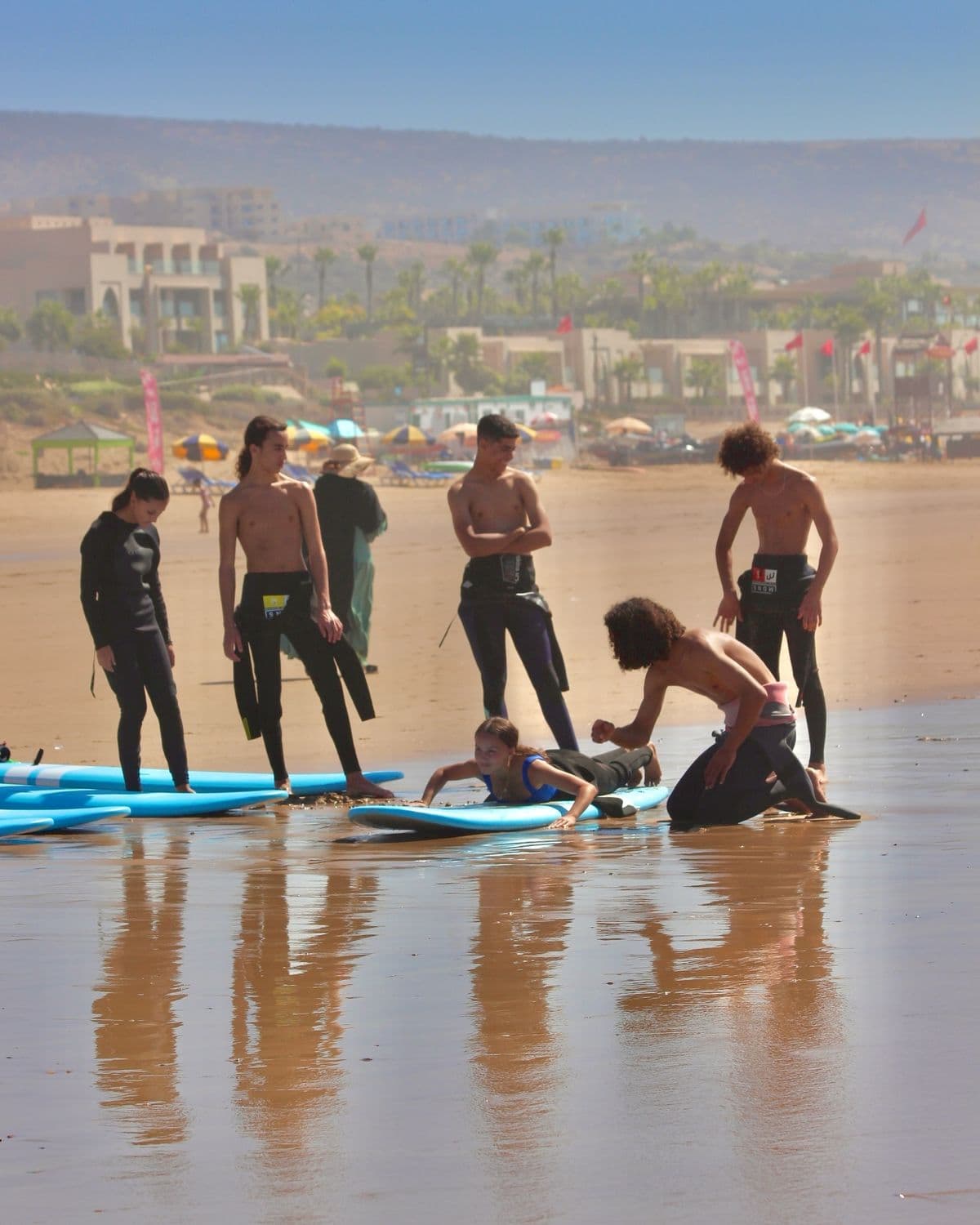
Taghazout has been on the surfing world's radar for decades, but it's only recently that it's become genuinely accessible for complete beginners. The village still has its soul — fishing boats, painted walls, the smell of mint tea drifting from cafe windows — but it also now has excellent surf schools, well-maintained gear and instructors who know exactly how to get a first-timer riding waves in a single session.
If you've always wanted to try surfing and you're wondering whether Taghazout is the right place to start, the short answer is yes. Here's everything you need to know before you go.
Is Taghazout Good for Beginner Surfers?
Taghazout is an excellent destination for beginner surfers, particularly between April and September when smaller, cleaner swells roll in from the Atlantic. The beach breaks south of the village — especially Banana Beach and Tamraght — offer the forgiving white water that beginners need, while the warm weather and reliable sunshine make learning genuinely enjoyable rather than an endurance test.
Understanding the Breaks
Taghazout's reputation is built on its point breaks — waves that peel predictably along a rocky headland, giving experienced surfers a long, shapely ride. These are not for beginners. But within a short drive, the picture changes completely.
Breaks for Beginners
- Banana Beach — the go-to for first lessons. Sandy bottom, gentle white water, and enough space to spread out without crowding.
- Tamraght Beach — 3 km south of Taghazout, longer beach with consistent beginner conditions and several reputable schools based here.
- Agadir Beach breaks — the southern end of Agadir's beach has soft, rolling white water in small swell conditions. Great for your very first session.
Breaks to Watch (Not Surf Yet)
- Anchor Point — Taghazout's most famous wave. A long, powerful right-hander that requires solid intermediate-to-advanced skills. Worth watching even if you can't ride it yet — the view from the cliff is one of the best in Morocco.
- Hash Point — smaller and more accessible than Anchor Point, but still best suited to those who can already read waves and paddle efficiently.
- Panoramas — a fun right-hander for intermediates, visible from the main road above the village.
What to Expect from a Surf Lesson
A standard beginner surf lesson runs two hours and typically breaks down like this:
- Land session (30 min): You'll learn how to read the ocean, where to position yourself, how to paddle efficiently, and practice the "pop-up" (standing up on the board) on the sand.
- Water session (90 min): Your instructor goes in with you, pushes the board into waves at the right moment, and gives real-time feedback. Most beginners catch their first wave within the first 30 minutes in the water.
- Debrief: A good instructor will show you video of your rides if they've been filming — invaluable for understanding what to fix.
Boards for beginners are large foamies (foam-topped longboards) — wide, stable and buoyant. You won't be on a shortboard on your first trip and that's exactly right.
Best Time to Visit Taghazout for Surfing
Taghazout surf season is effectively year-round, but conditions vary significantly:
October to April is peak surf season. Atlantic swells push in regularly, sometimes reaching 3–5 metres at the point breaks. This is when experienced surfers come from across Europe. Beginner conditions can be tricky during big swells — check the forecast and your instructor's advice before each session.
May to September is ideal for beginners. Swells are smaller (0.5–1.5 m), the weather is warm and dry (25–32 °C), and the overall learning environment is more relaxed. June and September offer the best combination of warm water, good waves, and fewer crowds.
July and August are peak tourist months. The surf is at its smallest but the beach gets busy and prices for accommodation rise. Still a fine time to learn — just book ahead.
Taghazout Surf Conditions by Month
| Month | Typical swell | Water temp | What to wear | Crowds | Beginner rating |
|---|---|---|---|---|---|
| January | 2–4 m | 17 °C | 3/2 wetsuit | Moderate | ★★ |
| February | 2–4 m | 17 °C | 3/2 wetsuit | Moderate | ★★ |
| March | 1.5–3 m | 17–18 °C | 3/2 wetsuit | Moderate | ★★★ |
| April | 1–2 m | 18 °C | 3/2 wetsuit | Low | ★★★★ |
| May | 0.5–1.5 m | 19 °C | Shorty or 3/2 | Low | ★★★★★ |
| June | 0.5–1.5 m | 20 °C | Shorty / rash vest | Low–moderate | ★★★★★ |
| July | 0.5–1 m | 21 °C | Rash vest | High | ★★★★ |
| August | 0.5–1 m | 22 °C | Rash vest | High | ★★★★ |
| September | 0.5–1.5 m | 22–23 °C | Rash vest / shorty | Low–moderate | ★★★★★ |
| October | 1.5–3 m | 21 °C | Shorty or 3/2 | Moderate | ★★★ |
| November | 2–4 m | 19–20 °C | 3/2 wetsuit | High (surf season) | ★★ |
| December | 2–4 m | 18 °C | 3/2 wetsuit | High (surf season) | ★★ |
Swell heights are open-beach averages — the famous point breaks can hold 3–5 m faces on big winter swells. For a first lesson, any month works: instructors simply pick the beach and tide window that match the day's conditions. See dates and prices for our surf lessons in Taghazout.
How Much Do Surf Lessons in Taghazout Cost?
A group beginner surf lesson in Taghazout costs around 250–400 MAD (roughly €25–40) for a two-hour session, and that price almost always includes the board, a wetsuit and a licensed instructor. Private one-to-one coaching runs 600–900 MAD (€55–85) per session. Week-long surf camp packages — accommodation, breakfast and daily lessons bundled — typically range from €250 to €450 per person depending on room type and season.
A few pricing notes from experience:
- Multi-day packs beat single sessions. Most schools discount 3- and 5-lesson packs by 15–25%, and progress compounds fast when you surf daily.
- Equipment-only rental (board + wetsuit, no instructor) is around 100–150 MAD per day once you can manage white water on your own.
- July and August book out. Reserve lessons ahead in peak summer; in May, June or September you can usually walk in.
- Bring cash. Most schools still take payment in dirhams on the day (see the packing list below).
What to Pack for a Surf Trip to Taghazout
- Rash vest or wetsuit: Most schools provide these, but bringing your own means a better fit. A 3/2 mm wetsuit is sufficient year-round; in summer a long-sleeve rash vest is enough.
- Reef-safe sunscreen: The Moroccan sun is intense. SPF 50 on face, neck and feet (yes, feet — they're out of the water facing the sun all lesson).
- Board shorts or swimwear: Fast-drying, well-fitted. Loose boardshorts flap and slow your pop-up.
- Flip-flops or water shoes: The walk to some beaches crosses rocky areas.
- Cash: Surf schools typically accept cash payment. A few now take cards but don't count on it.
- Hydration: Saltwater is exhausting. Bring at least a litre of water for a two-hour session.
Staying in Taghazout
The village is small and walkable. Accommodation options have multiplied in the last five years:
- Surf camps: The most popular choice for solo travellers and groups. Accommodation, meals and lessons are bundled. The social scene is built in.
- Riads and guesthouses: Several family-run guesthouses in the village offer simple rooms with rooftop views. Good value, quieter than camps.
- Agadir hotels with transfers: If you prefer a full-service resort, staying in Agadir and taking a daily transfer to Taghazout for lessons is perfectly practical — the drive is 20–25 minutes.
Beyond Surfing: What Else to Do in Taghazout
Between sessions, the village rewards slow exploration. The cliff walk above Anchor Point is spectacular at golden hour. The rooftop cafés serve the best café nuss-nuss (half coffee, half milk) and date pastries. Local fishermen sometimes sell the day's catch right on the beach.
For days when the surf is flat or you need a rest, the region around Taghazout has plenty to offer:
- Hike into the argan forest behind the village
- Drive north to Imessouane, a bay with a legendary long wave and one of Morocco's most remote-feeling villages
- Head to Paradise Valley for a swim in natural pools
- Take a sunset camel ride along the coast
This is a lovely way to end a surf day — trade the board for a camel, watch the Atlantic turn gold, then eat a Moroccan barbecue dinner under the stars.
Sıkça sorulan sorular
How long does it take to learn to surf in Taghazout?
Most beginners catch their first waves in a single two-hour lesson. Standing up consistently and riding a wave to the beach without falling takes most people three to five sessions. Feeling genuinely comfortable in the ocean typically requires a week of daily practice.
Is Taghazout surf good in summer?
Yes for beginners. Summer swells are small and consistent — ideal for learning pop-ups and building confidence. Experienced surfers prefer the bigger winter swells, but summer conditions at Banana Beach and Tamraght are genuinely excellent for first-timers.
Do I need to be fit to learn to surf in Taghazout?
A basic level of fitness helps — paddling uses your shoulders, back and core. But surf schools work with people of all fitness levels. Even short sessions teach you quickly which muscles need building, and most instructors will adapt the session to your energy level.
What is the water temperature in Taghazout?
Sea temperature ranges from around 17–18 °C in winter (February/March) to 22–24 °C in late summer (August/September). A 3/2 mm wetsuit makes winter surfing comfortable. In summer, a rash vest or shorty wetsuit is sufficient.
Can children learn to surf in Taghazout?
Absolutely. Children typically learn faster than adults — their lower centre of gravity helps enormously. Most surf schools in Taghazout welcome children from around age 7 upwards with appropriate supervision and sized-down boards.
Is Taghazout safe for solo female travellers?
Yes. Taghazout has a well-established international surf community and solo female travellers are common. Surf camps in particular offer a social structure that many find reassuring. The usual travel awareness applies, but reports of serious safety incidents are rare.
Okumaya devam et
 Agadir
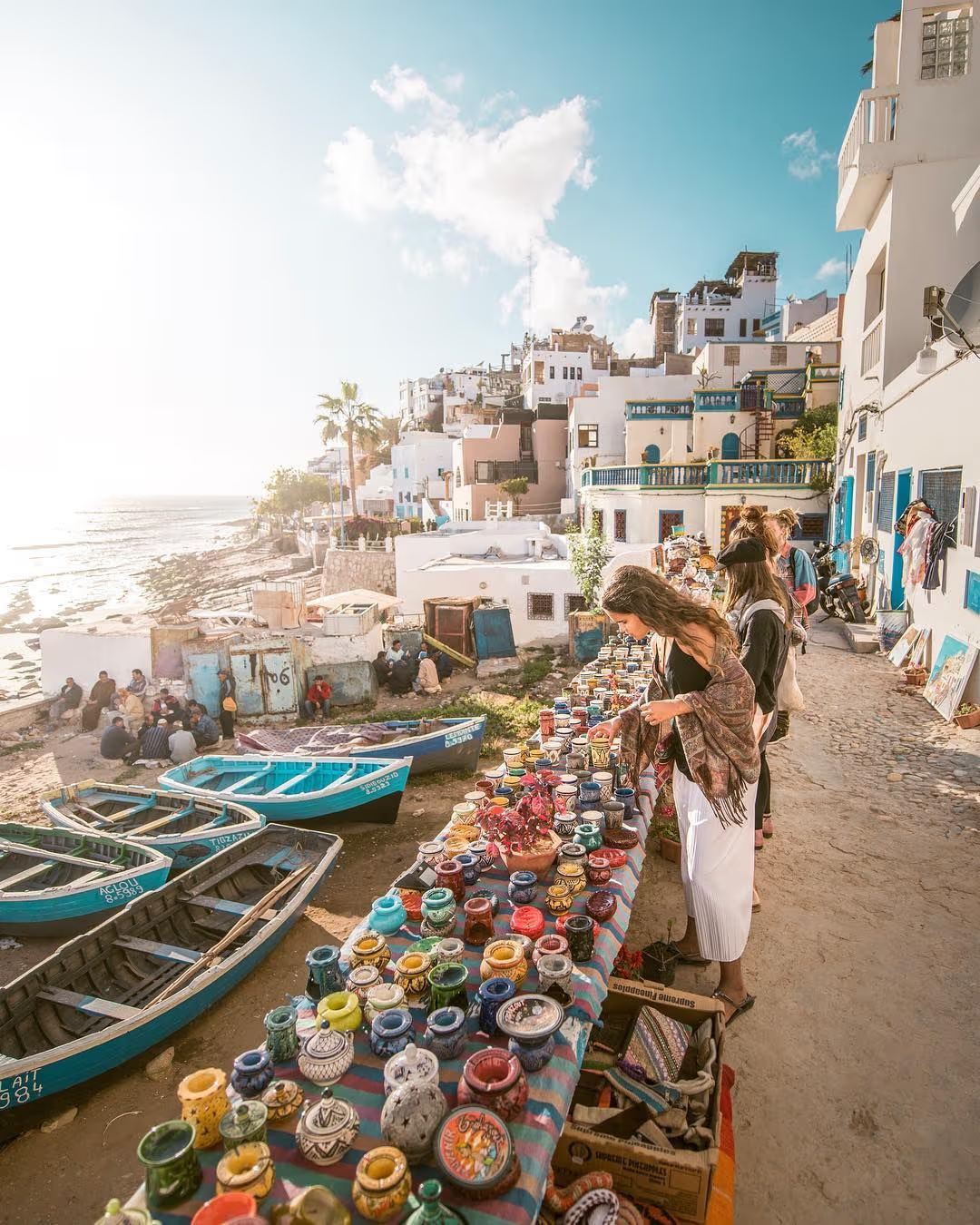
Things to Do in Agadir & Taghazout: The Ultimate Guide
From surf breaks and sandboarding to Paradise Valley waterfalls and smoky lamb tagine, this guide covers everything you need to make the most of Morocco's sunniest coast.
 Agadir
Where to Eat in Agadir & Taghazout: What Locals Actually Order
Forget restaurant guides. Here's how we actually eat in Agadir and Taghazout: fish by weight at the port, souk stalls for breakfast, and what a tagine should really cost.
 Agadir
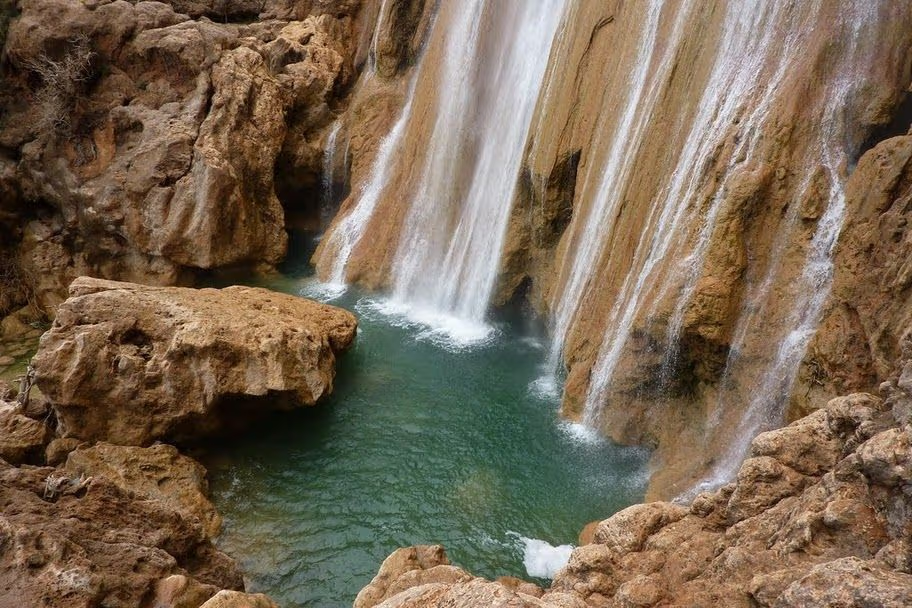
Imouzzer Waterfalls from Agadir: The Honest Guide (and When There Is Actually Water)
The Imouzzer waterfalls are at their best from November to April and a trickle the rest of the year — here's what we tell guests before they book, plus the honest case for going anyway.
Tartışma
Deneyimini paylaş, soru sor ya da bizi düzelt — her yorumu okuyoruz.
Bu yazı hakkındaki düşüncelerini paylaşan ilk kişi ol.